The floor of the ward was polished to a mirror shine, smelling of antiseptic and silence. In the early 1990s, a hospital room for those dying of AIDS-related complications was not just a place of medicine; it was a place of exile. Most people kept their hands in their pockets. They wore gloves. They looked through the glass. Then the doors swung open, and the most photographed woman in the world walked in. She didn't stay by the door. She didn't wait for a briefing. She sat on the edge of the bed and took a young man’s hand in her bare palm.
She didn't just touch his skin. She touched the stigma.
Princess Diana’s life is often framed as a series of glamorous gala appearances and tabloid headlines, but the core of her legacy wasn't found in the flashbulbs. It was found in the dirt, the disease, and the dark corners where society preferred not to look. When she spoke about her "destiny" to help the vulnerable, she wasn't using the airy language of a mystic. She was describing a bone-deep compulsion to be a human lightning rod for the suffering of others.
The Weight of the Crown versus the Weight of the World
Being a royal is usually an exercise in distance. You wave from a balcony. You ride in a glass coach. You are a symbol, and symbols don't get dirty. Diana, however, realized early on that her position was a tool—a massive, golden lever she could use to move the world’s attention.
She understood a fundamental truth about human nature: we find it easy to ignore statistics, but we find it impossible to ignore a person we love. By making the public love her, she forced them to look at the things she loved—the "unlovables." When she walked through an active minefield in Angola, she wasn't just highlighting a political issue. She was showing the world that if she, the People’s Princess, was willing to risk her life to stand where a child might lose a limb, then the rest of us had no excuse for our indifference.
Consider a hypothetical child in a village in Huambo. Before Diana arrived, that child’s struggle was a footnote in a dry NGO report. After she put on that ballistic vest and visor, that child’s safety became a global priority. She converted her fame into a shield.
The Geometry of Distress
There is a specific geometry to how we help people. Usually, it is top-down. It is a check mailed from a distance. It is a "thoughts and prayers" post. Diana’s geometry was horizontal. She wanted to be eye-to-eye.
When she spoke about "coming running" to those in distress, she was rejecting the bureaucratic pace of traditional charity. She operated on instinct. Friends and biographers often noted that she would slip out of Kensington Palace late at night, away from the cameras, to visit homeless shelters or bedside vigils. This wasn't for the "brand." There was no brand back then. It was a response to a visceral, almost painful empathy.
She felt the world’s pain as if it were her own. This wasn't always a gift. It made her raw. It made her vulnerable to the very society she was trying to heal. But it also gave her an authenticity that no amount of media training could ever replicate. People in distress don't want a lecture; they want a witness. Diana was the world's most visible witness.
The Essential Goal
"It is a goal and an essential part of my life," she once said.
Think about the word essential. In biology, something is essential if the body cannot function without it. For Diana, the act of service wasn't a hobby she picked up to fill the time between royal tours. It was the oxygen that kept her spirit alive during the most suffocating years of her marriage and public scrutiny.
When the walls of the palace felt like they were closing in, she went to the people who had no walls at all. She found a strange, beautiful symmetry with the homeless, the shunned, and the sick. They were outsiders in society; she was an outsider in the institution of the monarchy. That shared sense of displacement created a bond that was stronger than any royal decree.
She wasn't a saint. She was a person who chose to use her scars to understand the wounds of others. This is the part we often miss when we talk about her "destiny." Destiny sounds like something that happens to you, like a bolt of lightning. But for Diana, it was a choice she made every morning. She chose to be the person who didn't turn away.
The Echo of the Run
"I will come running wherever they are."
It’s a bold promise. It’s the kind of thing a mother says to a child after a nightmare. In the mouth of a global icon, it sounded like a revolution. It changed the way we expect our leaders and celebrities to behave. Before Diana, the "vulnerable" were often treated as a monolith—a group to be pitied from a safe distance. Diana broke that monolith into individual faces, names, and hands to be held.
Her impact wasn't just in the money raised, though that was in the millions. Her impact was in the shift of the cultural thermometer. She made compassion cool. She made it mandatory.
Today, we see the echoes of her "running" in the way we respond to global crises. We see it in the expectation that those with a platform should use it for more than just self-promotion. But we also see how rare her specific brand of courage remains. It is easy to tweet. It is hard to sit in the dust.
The Unfinished Journey
The tragedy of Diana’s death was that she was just beginning to understand the full power of her voice as an independent woman. She had stripped away the titles and the expectations, leaving only the woman who wanted to help.
She left us with a challenge that remains unanswered. The "vulnerable" are still there. They are the refugees waiting at borders, the elderly forgotten in care homes, and the people struggling with mental health in a world that moves too fast to listen.
We often wait for a "Diana figure" to appear and lead the way. We wait for someone with a crown or a million followers to tell us it’s okay to care. But the real lesson of her life wasn't that she was special. It was that she was willing.
She proved that the most powerful thing you can do for another human being is to simply show up. To not look away. To be the one who comes running when the rest of the world is walking in the opposite direction.
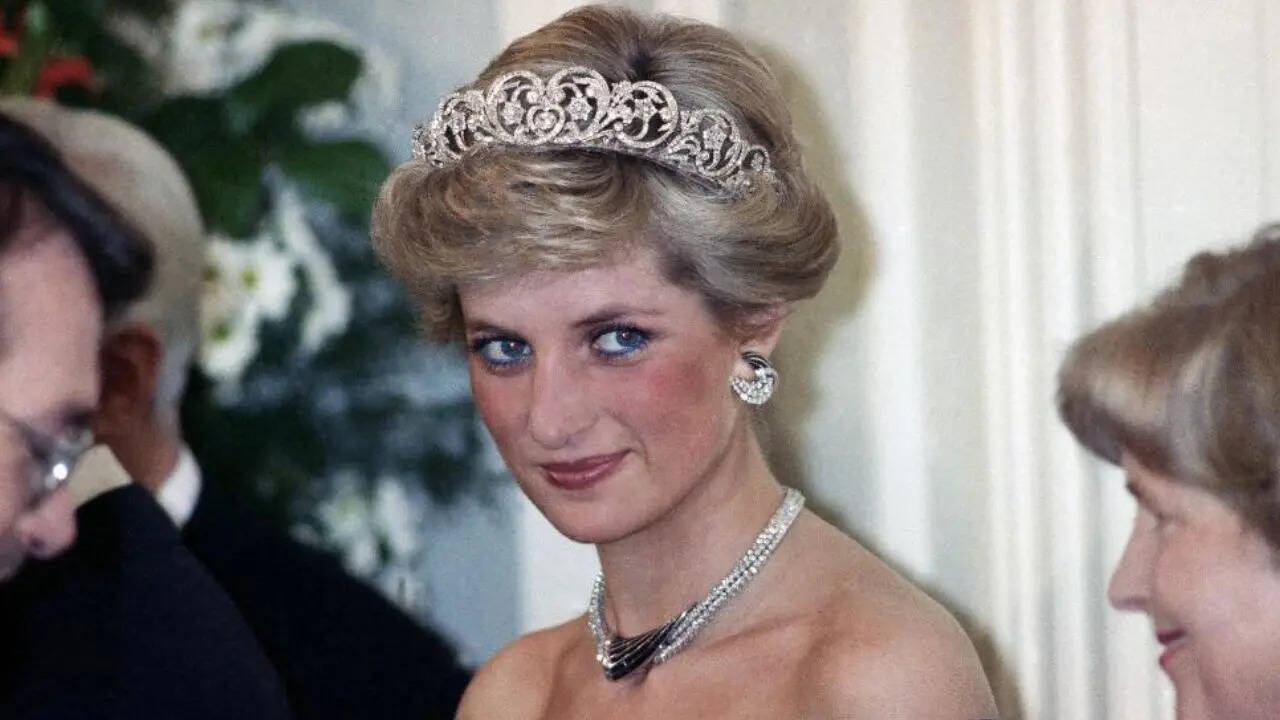
The image that lingers isn't the one of her in a tiara, though those are plenty. It is the image of her in a simple white shirt, sitting in the red dust of a minefield, looking at a map of a world she was determined to make a little less dangerous, one step at a time. The map is still open. The path is still there.
Someone just has to be brave enough to walk it.