Wuhan is currently the world's biggest laboratory for autonomous driving. Thousands of Baidu’s Apollo Go cars roam the streets, turning the city into a sci-fi vision of the future. But a massive system failure recently turned that vision into a logistical nightmare. When a server-side glitch or connectivity blackout hit the fleet, passengers didn't just lose their rides. They found themselves trapped inside stationary vehicles stuck in the middle of live, moving traffic.
This isn't just a minor technical hiccup. It’s a glaring red flag about the centralized nature of current autonomous systems. If the "brain" in the cloud stops talking to the car on the asphalt, the car doesn't always know how to fail gracefully. In Wuhan, it just stopped.
The Day the Apollo Go Fleet Stood Still
Imagine you're heading to work in a car with no steering wheel. Suddenly, the app freezes. The car slows down and stops dead in the center lane of a six-lane highway. You can't take over because there's nothing to grab. You can't even easily exit because the doors are electronically locked until the trip "completes." This happened to real people in Wuhan.
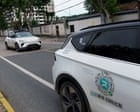
The outage affected a significant portion of the Apollo Go fleet. Social media quickly filled with videos of dozens of white-and-green SUVs sitting idle at green lights. Human drivers in regular cars honked and swerved around them, creating a recipe for high-speed collisions. It’s a mess.
Baidu eventually acknowledged the issue, citing a network fluctuation. That's corporate-speak for "our servers went down and we didn't have a backup plan for the cars already on the road." For a city that has embraced these vehicles as a primary mode of transport, the reliability gap is becoming impossible to ignore.
Why Centralized Control is a Massive Risk
The current architecture of most robotaxi services relies on a constant "heartbeat" from a central server. The car handles the immediate obstacle detection—like not hitting the cat that just ran out—but the high-level routing and "permission to move" often come from the cloud.
When that connection breaks, the safety protocol is usually "Stop." On paper, stopping is the safest action. In reality, stopping in the middle of a bridge or a busy intersection is incredibly dangerous.
- The Latency Trap: Most systems need 5G connectivity to stream teleoperation data. If the signal drops in a "dead zone" or the server lags, the car loses its guide.
- The Kill Switch Problem: There is currently no standardized way for a passenger to manually "limp" the car to the shoulder of the road.
- The Gridlock Effect: Because these cars follow the same logic, a single bug affects every vehicle simultaneously. It’s not like human drivers where one person might have a heart attack; it’s as if every driver in the city had a heart attack at the exact same second.
We need to talk about "Edge Autonomy." This means the car needs enough onboard intelligence to navigate to a safe spot—like a parking lot or a side street—even if it loses every bit of contact with the home base. Relying on a server in a data center miles away to keep a car moving in traffic is, quite frankly, a design flaw.
The Human Cost of the Wuhan Experiment
Wuhan residents have a complicated relationship with their robot-overlords. On one hand, the rides are dirt cheap. You can cross the city for a fraction of what a human Uber or Didi driver would charge. On the other hand, the "stupidity" of the AI is a daily grievance.
The recent outage is the breaking point for many. Being stranded in a moving traffic lane is terrifying. It’s a physical entrapment that people didn't sign up for when they downloaded the app. The local government has been incredibly supportive of Baidu, but public sentiment is shifting. People are starting to ask if the convenience is worth the risk of being a sitting duck in a metal box.
There's also the economic friction. Human taxi drivers in Wuhan have been protesting for months. They claim the robotaxis are "stealing their rice bowls" by undercutting prices. When the robots fail this spectacularly, it gives the human workforce a lot of ammunition. They aren't just arguing about jobs anymore; they're arguing about public safety.
What Needs to Change Before This Goes Global
If this happened in San Francisco or Phoenix, the regulatory backlash would be swift and brutal. China’s approach has been "move fast and fix it later," but "later" has arrived.
The industry needs to move toward decentralized safety. We need a "Minimum Risk Maneuver" (MRM) that doesn't involve stopping in the middle of the street. If the car loses its connection, it should have a pre-mapped "safe harbor" protocol. It needs to recognize that a highway lane is not a parking spot.
We also need physical overrides. The push to remove steering wheels and pedals is premature. At the very least, there should be a joystick or a low-speed manual control for passengers to use in emergencies. Trusting the software 100% of the time is proving to be a mistake.
Hard Lessons from the Wuhan Streets
Don't expect Baidu to slow down, though. They've already doubled down on their expansion plans. But for the rest of us, the Wuhan incident is a textbook example of why "fully autonomous" is still a work in progress.
If you're a developer or an investor in this space, look closely at the fail-states. It’s easy to make a car drive when everything is perfect. It’s incredibly hard to make it behave when the world—or the network—falls apart.
Next time you see a robotaxi, look at the roof. See those sensors? They're amazing. But remember that they’re only as good as the server they're talking to. Until these cars can "think" entirely for themselves without a digital umbilical cord, we're going to see more people stranded in the middle of busy roads.
Check your ride-sharing apps for "emergency exit" instructions. Know how to manually pop the doors in your specific vehicle model. Don't assume the software will let you out just because the car has stopped. Safety in the autonomous age requires you to be a lot more skeptical than the marketing suggests.