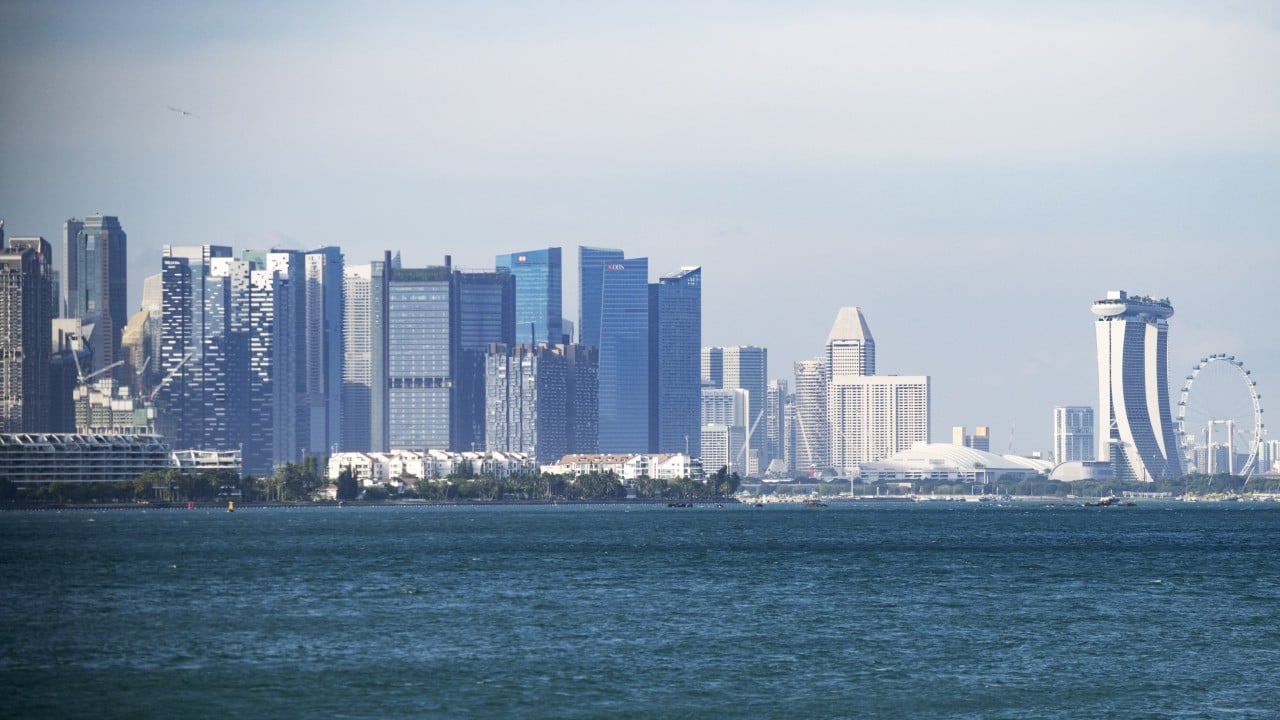
The outrage machine is humming again because an Australian radio host called Singapore an "autocracy," prompting a predictably stiff-collared rebuttal from a diplomat. It’s the same tired script: Western media performs its ritualistic dance of moral superiority, while the target defends its "unique model." Both sides are wrong. The real scandal isn’t that Singapore is a "benevolent dictatorship"—it’s that Western "liberal democracies" like Australia have become far more meddlesome, less transparent, and arguably more autocratic in their daily interface with the citizen than the city-state they love to criticize.
If you measure autocracy by the ability of a state to impose its will on the individual without meaningful recourse, the data suggests we’ve been looking at the wrong map.
The Competency Trap
Western critics suffer from a cognitive bias I call the "Messy Room Fallacy." Because Australian politics is a loud, chaotic brawl, we assume it is free. Because Singapore’s politics is quiet and orderly, we assume it is oppressed. This is a primary-school level of analysis.
In Singapore, the social contract is explicit: the state provides security, world-class infrastructure, and a hyper-competitive economy. In exchange, the public accepts certain guardrails on political discourse. You know what you’re signing up for. In Australia, the contract is a bait-and-switch. We are told we live in a bastion of liberty, yet we are subjected to some of the most invasive surveillance laws and regulatory overreach in the OECD.
I have watched companies waste millions of dollars navigating the thicket of Australian bureaucracy—a system that is "democratic" in name but functions as a Kafkaesque autocracy of the middle manager. In Singapore, the government is a high-performance service provider. In Australia, it is an unpredictable landlord who changes the locks without telling you.
Dismantling the Autocracy Myth
Let’s talk about the "autocracy" label. If we use the standard definition—a system of government by one person with absolute power—Singapore fails the test. It has an electorate, regular elections, and a functioning judiciary. What critics actually mean is that the People's Action Party (PAP) is too good at winning.
The "lazy consensus" says the PAP wins because it suppresses the opposition. The nuance they miss? The PAP wins because it has mastered "Performance Legitimacy."
Imagine a scenario where a Western government actually delivered on its promises. No, really. Imagine if an Australian infrastructure project finished on time and under budget. Imagine if the healthcare system wasn't a crumbling mess of waitlists. If an Australian party delivered Singapore-level outcomes, they would win for 60 years too. We call it "autocracy" to mask our own institutional incompetence.
The Surveillance Double Standard
The Australian radio host’s critique likely touched on civil liberties. This is where the hypocrisy becomes deafening.
Australia’s Telecommunications and Other Legislation Amendment (Assistance and Access) Act 2018 allows the government to compel tech companies to build backdoors into encrypted communication. This is a power that would make any actual autocrat salivate. While Singapore is open about its "Smart Nation" surveillance—cameras are visible, the intent is clear—Australia hides its digital panopticon behind a veil of "national security" rhetoric that bypasses the very democratic oversight it claims to champion.
Which is more autocratic? A state that tells you it is watching to keep the streets safe, or a state that tells you it is protecting your privacy while legally mandating its destruction in the shadows?
Property and the Illusion of Freedom
The most profound "autocracy" isn't found at a ballot box; it’s found in your bank account.
Singapore’s HDB (Housing and Development Board) system is often decried as state-controlled social engineering. Yet, it has resulted in a homeownership rate of nearly 90%. In Australia, the "free market" has produced a generation of permanent renters who are effectively indentured to a banking oligarchy.
When a young Australian cannot afford to live within two hours of their job, they aren't "free." They are a cog in a system they have zero power to change. The Singaporean citizen, despite the "autocratic" labels, possesses the ultimate form of liberty: the financial autonomy that comes from stable, high-value asset ownership.
The Data of Governance
Consider the World Bank’s Government Effectiveness rankings. Singapore consistently sits at the top. Australia is sliding.
- Singapore Efficiency Index: High-speed, digital-first, outcome-oriented.
- Australian Efficiency Index: Clogged by "consultation" phases that lead nowhere and political cycles that favor three-year soundbites over thirty-year strategies.
We have confused "noise" with "democracy." We think that because we can yell at the Prime Minister on social media, we are more empowered than the Singaporean who quietly enjoys the highest standard of living in Asia.
The Real Price of "Freedom"
If you want to challenge the status quo, stop asking if Singapore is an autocracy. Ask why the West is so desperate to believe it is.
We use Singapore as a bogeyman to distract from our own failures. We point at their "lack of a free press" while our own media outlets are consolidated into the hands of a few billionaires or hollowed out by algorithmic clickbait. We point at their "strict laws" while our own cities struggle with rising crime and decaying social cohesion.
I’ve spent decades analyzing global markets and political risk. The most dangerous risk isn't a stable, high-performing state with a dominant party. The risk is a "democracy" that has forgotten how to govern, where the citizens have the right to vote but no ability to influence the outcomes of their lives.
Stop Asking the Wrong Questions
People also ask: "Is Singapore a safe place to invest?"
The answer is brutally honest: It is the only safe place. In a world of populist swings—where a trade agreement can be torn up because of a tweet—Singapore’s consistency is its greatest democratic export. It provides the one thing business and families actually crave: predictability.
Stop obsessing over the labels. Start looking at the results.
The Australian envoy was right to be annoyed, but not because the radio host was "mean." He was right to be annoyed because the critique was lazy. It was the intellectual equivalent of calling a high-performance athlete a "cheat" because they never lose.
If we want to "fix" our relationship with Singapore, we need to stop lecturing them on democracy and start studying how they actually manage to serve their people.
Western leaders shouldn't be slamming Singapore; they should be taking notes. The era of the "messy democracy" being the only valid path to prosperity is over. The data is in, the outcomes are clear, and the moral high ground has long since eroded into the sea.
Build a bridge to Singapore's efficiency or get comfortable sinking in the chaos.