European aviation is staring at a dry pump. While travelers worry about ticket prices and legroom, a much more fundamental threat is brewing in the narrow, turquoise waters of the Strait of Hormuz. If this maritime chokepoint closes, the fuel reserves at major hubs like Heathrow, Charles de Gaulle, and Frankfurt will begin to vanish in a matter of weeks. This isn’t a hypothetical supply chain hiccup. It is a structural failure decades in the making.
The crisis stems from a dangerous dependency on long-haul energy imports. Europe has spent the last twenty years shuttering its own refineries in favor of cheaper, more efficient mega-refineries in the Middle East and India. Now, the continent finds itself at the end of a very long and very fragile string. When that string gets tangled in Persian Gulf geopolitics, the entire European flight board risks going dark.
The Physical Reality of the Chokepoint
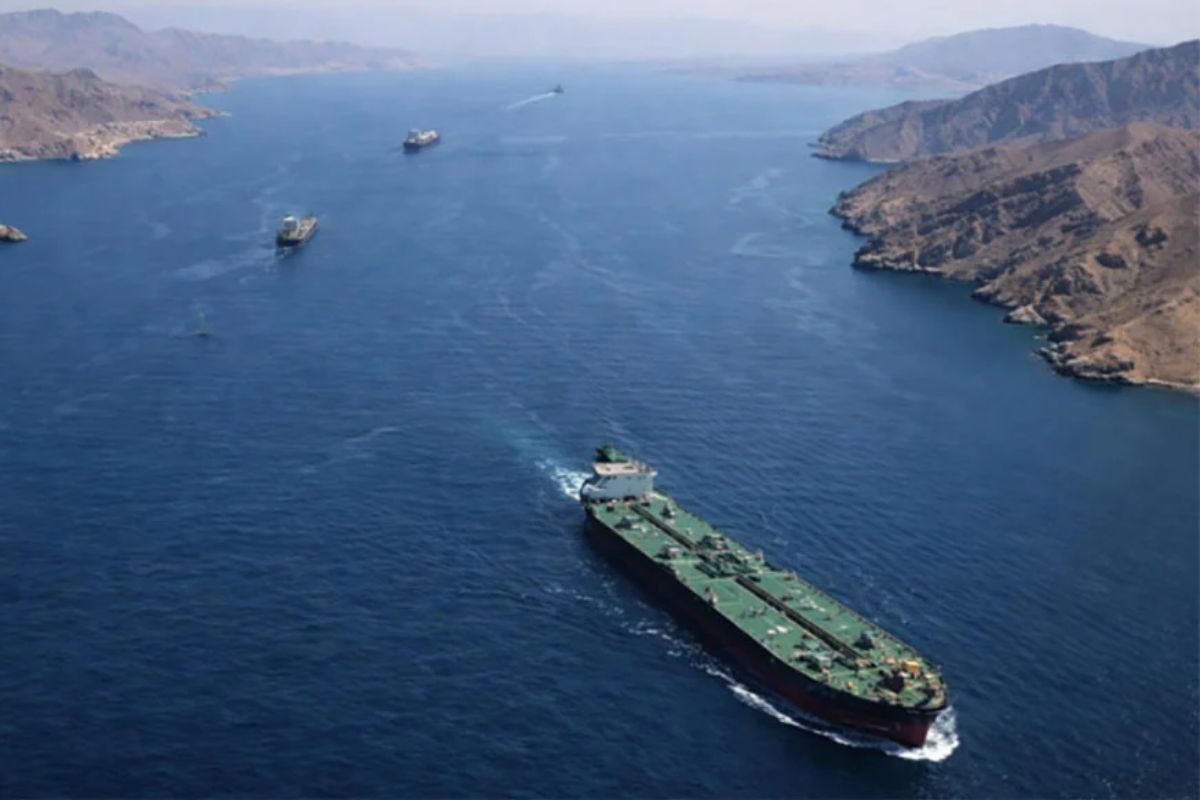
The Strait of Hormuz is only twenty-one miles wide at its narrowest point. Through this gap flows roughly one-fifth of the world’s liquid petroleum. For Europe, the stakes are even higher than that global average suggests. Unlike the United States, which has pivoted toward energy independence through domestic shale production, Europe remains a massive net importer of refined jet fuel, specifically A-1 grade kerosene.
A closure of the Strait doesn't just stop crude oil. It stops the specialized tankers carrying finished product from refineries in Kuwait, Qatar, and the United Arab Emirates. These are the lifeblood of European aviation. When these ships stop moving, the clock starts ticking for every airport ground crew from Madrid to Warsaw.
The Just in Time Logistics Nightmare
Modern airports do not sit on massive lakes of fuel. They operate on a razor-thin margin of Just-in-Time delivery. Most major European hubs keep enough fuel on-site to last between three and five days of normal operations. They rely on a constant, rhythmic pulse of pipeline deliveries and rail cars to keep the tanks filled.
If a tanker is diverted or blocked at Hormuz, it can’t simply be replaced by a local supplier. The European refining sector is currently a shadow of its former self. Since 2008, dozens of refineries across the continent have been converted into storage terminals or closed entirely because they couldn't compete with the scale of Gulf producers. We traded security for a slightly lower cost per gallon. Now, the bill is coming due.
The Pipeline Problem
The infrastructure within Europe is also rigid. The Central European Pipeline System (CEPS) is a complex web designed to move fuel, but it was built for a different era. It cannot suddenly pivot to move fuel from the North Sea to the Mediterranean if the southern ports are starved of Middle Eastern imports. Logistics experts know that moving fuel across land is significantly more expensive and less efficient than moving it by sea. Without the tankers, the internal network begins to cannibalize itself.
Why the Suez Canal Won’t Save Us
Some analysts point to the Suez Canal as the obvious detour. They are wrong. While the Suez provides a path for tankers, it is often subject to its own set of regional instabilities and physical bottlenecks. Furthermore, if the Strait of Hormuz is shut due to military conflict, the entire Middle Eastern theater becomes a "no-go" zone for maritime insurance providers.
Insurance premiums for tankers would skyrocket to the point of being prohibitive. A ship owner isn't going to risk a $150 million vessel to deliver jet fuel to London if the war risk insurance costs more than the cargo itself. We saw a preview of this during recent Red Sea tensions. When the ships stop, the fuel stays in the sand, and the planes stay on the tarmac.
The Hidden Fragility of Jet A-1
Jet fuel is a finicky beast. You cannot simply swap it for diesel or heating oil in a pinch. It requires specific thermal stability and freeze-point characteristics to ensure engines don't flame out at thirty thousand feet. This specificity means that the global market for Jet A-1 is much smaller and more volatile than the market for crude oil.
When supply drops by even 10%, prices don't just rise by 10%. They explode. European airlines, already operating on thin margins, would face a choice between grounding fleets or passing on four-figure fuel surcharges to passengers. Neither option is sustainable. The economic ripple effect would be devastating, hitting tourism, international trade, and the broader service economy.
Stockpiling is a Myth
Governments talk about strategic reserves, but those reserves are primarily geared toward crude oil for ground transport and military use. There is no massive, coordinated European stockpile of refined jet fuel ready to bail out the commercial aviation industry for months on end. The industry is effectively flying without a net.
The Failure of Energy Diversification
Europe’s push for "Green Aviation" has, ironically, made the short-term fuel crisis worse. By focusing heavily on the distant promise of Sustainable Aviation Fuel (SAF), policymakers have neglected the maintenance of existing fossil fuel infrastructure. SAF currently accounts for less than 1% of total global aviation fuel use. You cannot run a continent’s economy on a 1% solution.
While the long-term goal is noble, the transition period has left the industry vulnerable. We have disincentivized investment in local refining while the demand for air travel continues to climb. We are stuck in a "valley of death" where the old system is being dismantled before the new system is anywhere near ready to take the load.
The Geopolitical Leverage
The Strait of Hormuz is more than a geography lesson. It is a political lever. Nations that control or can influence the Strait know exactly how much pressure a fuel shortage puts on European capitals. In any diplomatic standoff, the threat of grounded flights at Heathrow is a potent weapon. It affects voters, it affects the stock market, and it affects a nation's ability to project power.
Europe’s lack of a "Plan B" for aviation fuel is not an oversight. It is a deliberate choice to prioritize short-term market efficiency over long-term national security. The current system assumes that the world will always be stable and that the seas will always be open. That is a naive assumption in the current global climate.
The Economic Aftershocks
If the taps are turned off, the first thing to go will be long-haul cargo. We often forget that a significant portion of global high-value freight—electronics, pharmaceuticals, and specialized machinery—travels in the bellies of passenger planes. A fuel shortage at European hubs would instantly snap global supply chains that are already under tension.
- Regional Carriers: Smaller airlines with less cash on hand would face immediate insolvency.
- Hub Competitiveness: Airports like Dubai or Singapore would gain a massive advantage over European hubs if they can maintain their own fuel security.
- Consumer Behavior: A prolonged shortage would likely end the era of affordable European air travel, reverting flying to a luxury reserved for the elite.
The Infrastructure Dead End
Building a refinery isn't like opening a warehouse. It takes a decade of permitting, billions of dollars in capital, and a political will that currently doesn't exist in Europe. We cannot simply "build our way out" of this crisis once it starts. The time to shore up our energy independence was ten years ago. The second best time is right now, but the current regulatory environment makes that almost impossible.
Environmental regulations, while necessary for the planet, have made the construction of new refining capacity in Europe a non-starter. This creates a paradox. We want to be green, but we still need to fly, so we outsource the "dirty" refining to other parts of the world and pretend the risk doesn't exist. This hypocrisy is exactly what the Hormuz crisis would expose.
Real World Consequences for the Passenger
For the person holding a ticket, the reality would be chaos. It starts with "technical stops" where a plane has to land in a third country just to refuel because the destination airport is empty. Then come the cancellations. Not just a few, but hundreds of flights a day.
We saw a micro-version of this during the 2010 Eyjafjallajökull volcano eruption. The difference is that a volcano eventually stops erupting. A geopolitical blockade of a primary energy artery has no set expiration date. It can last as long as the combatants want it to.
The Strategy of Silence
Airlines and airport authorities are hesitant to speak openly about the severity of this vulnerability. To do so would be to admit a level of helplessness that scares off investors and travelers alike. They prefer to talk about "resilience" and "diversification," but those are often just words used to mask a total lack of control over their primary input.
The reality is that Europe’s aviation sector is a giant with feet of clay. It is a high-tech, high-speed industry that is entirely dependent on a 19th-century concept: the control of a narrow strip of water on the other side of the planet.
Breaking the Dependency
Solving this requires more than just hoping for peace in the Middle East. It requires a radical rethink of how Europe manages its energy security. This includes:
- Mandatory Minimum Reserves: Forcing airports to maintain much larger on-site fuel stocks, regardless of the cost.
- Refining Incentives: Changing the tax and regulatory structure to make it viable to refine fuel within European borders again.
- Infrastructure Hardening: Completing the internal pipeline gaps so that fuel can be moved seamlessly across the continent in an emergency.
None of these solutions are cheap. None of them are popular with environmental lobbyists. But they are the only way to ensure that "European aviation" doesn't become a historical footnote.
The next time you see a headline about tensions in the Persian Gulf, don't just think about the price of gas at the station down the street. Think about the fuel tanks under the tarmac at de Gaulle. Think about the tankers sitting idle in a strait thousands of miles away. The connection is direct, it is fragile, and it is currently the single greatest threat to the way we move across the world.
Stop assuming the fuel will always be there just because you paid for a ticket. The supply chain doesn't care about your vacation or your business meeting. It only cares about the physical movement of molecules through a narrow gap in the earth's crust. If those molecules stop moving, Europe stops flying. Simple as that.