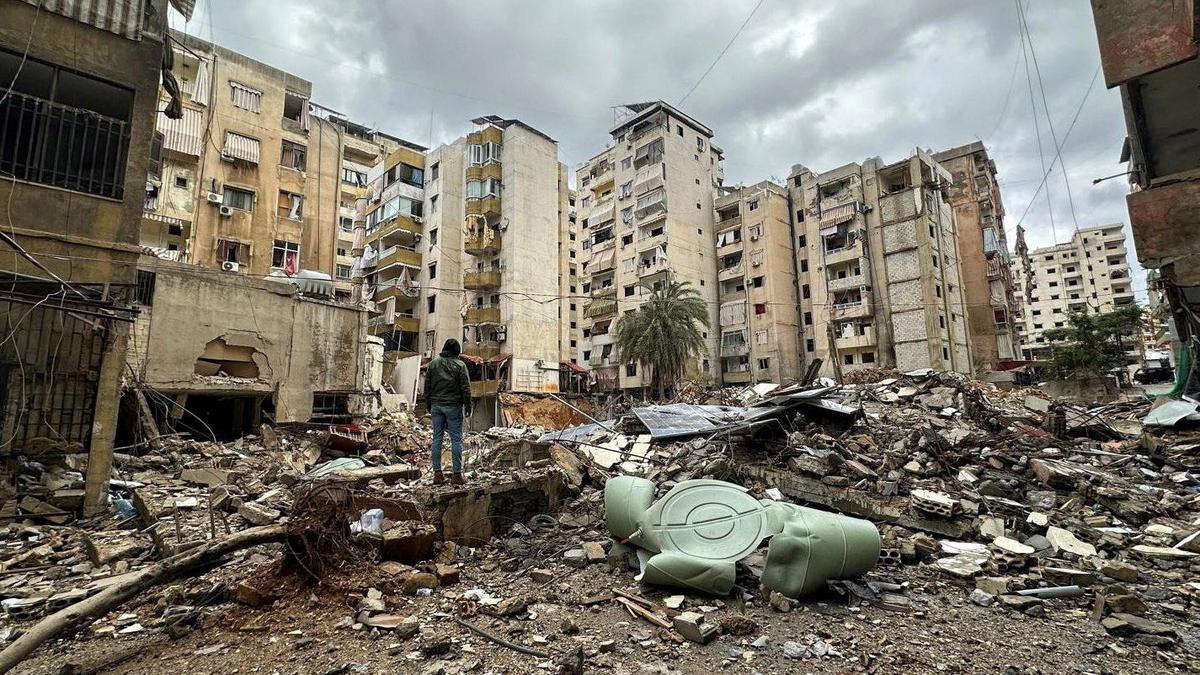
The death of a journalist in a conflict zone is rarely just a tragic accident of geography. It is a structural failure of international law and a direct assault on the mechanics of global oversight. When French Foreign Minister Jean-Noël Barrot stood in Beirut recently to condemn the killing of media workers by Israeli strikes in South Lebanon, he wasn’t just performing a diplomatic ritual. He was highlighting a systemic breakdown where the "Press" vest has transitioned from a shield of neutrality into a target of opportunity. In the rugged terrain of the Blue Line, the boundary between Lebanon and Israel, the high-definition lens is now viewed with as much suspicion as a thermal scope.
France’s demand for the protection of journalists is rooted in a specific geopolitical anxiety. Lebanon is a former French mandate, and Paris still views itself as the guarantor of Lebanese sovereignty and civil society. However, the rhetoric coming out of the Quai d’Orsay often hits a wall of military pragmatism. For the Israel Defense Forces (IDF), the presence of media near Hezbollah strongholds is a tactical complication. For Hezbollah, the media is a tool for the "information war" that mirrors the physical one. In the middle are the reporters, photographers, and technicians who are being erased from the battlefield at a rate that suggests the rules of engagement have been rewritten in blood. Recently making waves in this space: Finland Is Not Keeping Calm And The West Is Misreading The Silence.
The Mirage of Protected Status
International humanitarian law is explicit. Journalists are civilians. They are granted the same protections as any non-combatant unless they take a direct part in hostilities. But in the modern asymmetric conflict, the definition of "direct part" has been stretched to a breaking point. When a camera crew films a rocket launch site or the aftermath of a strike on a command center, they are providing real-time intelligence to the world. In the eyes of a drone operator, that intelligence can be indistinguishable from tactical reconnaissance.
This is not a theoretical problem. It is a lethal one. On October 13, 2023, Reuters video journalist Issam Abdallah was killed, and several other journalists, including those from Agence France-Presse (AFP) and Al Jazeera, were wounded by Israeli shelling. Multiple investigations by independent human rights organizations and news agencies concluded that the group was targeted despite being stationary, clearly marked, and far from active fighting. The incident revealed a grim reality. The "deconfliction" protocols that are supposed to allow journalists to operate safely are either being ignored or have become fundamentally broken. More insights regarding the matter are covered by The Guardian.
Military units often claim that journalists are caught in "crossfire," a term that suggests a random, chaotic exchange. Yet, forensic evidence from recent strikes in Lebanon shows a pattern of precision. When a missile hits a house where media members are sleeping—as happened in the Hasbaya strike that killed three media workers from Al-Mayadeen and Al-Manar—it isn't a stray bullet. It is a calculated hit on a specific coordinate. The intent is not necessarily to kill a specific person, but to clear the area of observers. A battlefield without witnesses is a battlefield where any action can be justified after the fact.
The Strategy of Information Shuttering
To understand why these killings continue despite international condemnation, one must look at the strategic value of an information vacuum. In the current conflict, the narrative is the terrain. If a military can prevent high-quality, verified footage from reaching the evening news in Paris, Washington, or London, it gains "operational maneuver room." This is the euphemism for being able to conduct warfare without the friction of public outcry.
The targeting of journalists in Lebanon serves a dual purpose. First, it creates a physical "no-go" zone. When the cost of reporting becomes a life, news organizations naturally pull back. They move their crews away from the front lines and into the safer, but less revealing, confines of central Beirut. Second, it shifts the burden of proof. When professional journalists are gone, the only sources of information left are the propaganda arms of the combatants themselves. We are then left to choose between two versions of a lie, with no one on the ground to provide the inconvenient truth.
France’s condemnation is an attempt to push back against this shuttering of the information window. Minister Barrot’s statements are a reminder that the world is watching, even if the view is becoming increasingly blurred. But words in a press conference do not stop a 120mm tank shell. The failure of the international community to impose actual consequences for the killing of journalists has created a culture of impunity. If there is no trial, no sanction, and no diplomatic cost, then the "Press" badge is nothing more than a piece of Velcro.
The Tech Behind the Targeting
We must examine the role of Artificial Intelligence and automated targeting systems in these incidents. Modern militaries use platforms that aggregate data points to identify "patterns of life." A vehicle that travels to certain areas, stays for a specific duration, and carries heavy equipment might be flagged by an algorithm as a logistics vehicle for an armed group. If the human in the loop—the person who makes the final decision to fire—does not exercise extreme caution, the machine’s "best guess" becomes a death sentence for a news crew.
The speed of modern warfare has outpaced the speed of traditional verification. In the seconds it takes for a commander to authorize a strike, the nuance of a blue helmet or a "TV" sticker is often lost. This technological shift has effectively shifted the risk from the military onto the civilian observer. The military logic is simple. It is better to hit a potential threat than to risk a missed opportunity, even if that threat turns out to be a freelance photographer with a tripod.
Beyond the Official Condemnation
The French government’s stance is admirable in its consistency, but it lacks the teeth required to change behavior on the ground. To truly protect journalists, the international community needs to move beyond "condemnation" and toward "accountability." This means supporting independent, transparent investigations that are not conducted by the same military that pulled the trigger. It means making military aid contingent on the respect for civilian and media lives.
The crisis in Lebanon is a microcosm of a global trend where the truth is being treated as a combatant. From Ukraine to Gaza to the Sahel, the space for independent journalism is shrinking. The killing of media workers is the final stage of a process that begins with censorship and ends with elimination. When a journalist is killed, the public's right to know dies with them.
We are entering an era where the bravest acts of journalism are not the grand investigative exposés written from the safety of a capital city, but the simple act of standing on a hillside with a camera and refusing to move. Those who do so are not just reporting on a war. They are defending the very idea that some things remain sacred even in the middle of a slaughter.
The French Foreign Minister can speak until the microphones are turned off, but until the international community treats the killing of a journalist with the same gravity as a war crime, the bodies will continue to pile up in the olive groves of South Lebanon. The only way to ensure the safety of those who document the war is to make the price of killing them too high to pay. Anything less is just noise in an increasingly deafening conflict.
Demand that your representatives support the establishment of an independent, international commission to investigate every journalist death in Lebanon since October 2023.