Jerusalem during Holy Week isn't just a religious site. It's a pressure cooker. When Israeli police blocked a high-ranking Catholic Cardinal from entering the Church of the Holy Sepulchre on Palm Sunday, it wasn't just a simple logistical hiccup or a crowd control measure. It was a flashpoint that exposed the fraying nerves of a city where faith and geopolitics collide every single meter.
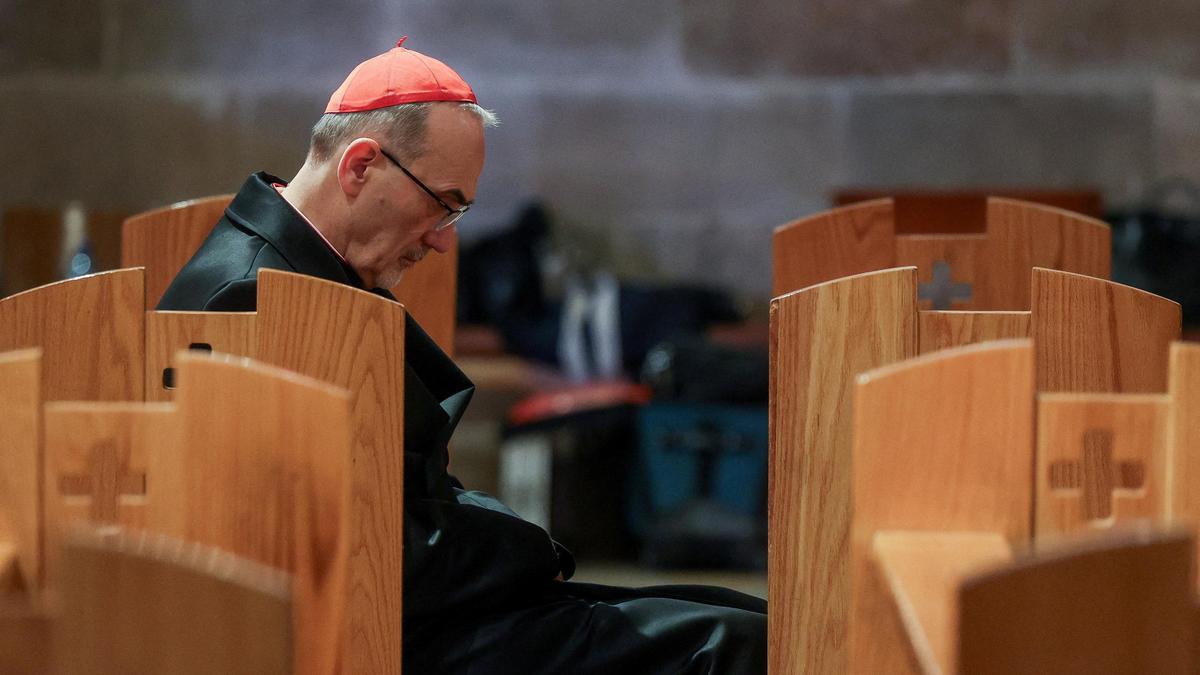
Cardinal Leonardo Sandri, a heavyweight in the Vatican hierarchy, found himself staring at a barricade instead of the altar. This didn't happen in a vacuum. It happened during a period of heightened security where "safety" often feels like a code word for "restriction" to the local Christian community. If you think this is just about one man in a red hat being delayed, you're missing the bigger picture of how religious freedom is currently being navigated—or strangled—in the Old City.
Why the Palm Sunday incident matters more than you think
Palm Sunday marks the start of the most sacred week in the Christian calendar. For the Latin Patriarchate and the thousands of pilgrims who descend on Jerusalem, the procession from the Mount of Olives into the Old City is the emotional peak of their year. But for the Israeli security forces, it’s a massive headache. They see a security nightmare. The Christians see a systematic Erasure of their presence.
When the police stopped Cardinal Sandri, it sent a shockwave through the diplomatic corps. We aren't talking about a random tourist. We're talking about the Prefect Emeritus of the Dicastery for the Oriental Churches. Blocking him is the ecclesiastical equivalent of stopping a Secretary of State at a border crossing. It signals a breakdown in the "Status Quo"—the delicate, centuries-old set of rules that governs who does what and when in Jerusalem's holy sites.
The official line usually involves "public safety" and "overcrowding." But talk to anyone on the ground and they'll tell you a different story. They'll tell you about the increasing number of checkpoints, the aggressive behavior of some officers, and the feeling that the Christian minority is being squeezed out. It’s a messy, tense reality that a simple press release can't capture.
The reality of the Status Quo under pressure
The Status Quo isn't a suggestion. It's a rigid framework established in the 19th century to prevent the different Christian denominations from literally brawling over who cleans which window in the Holy Sepulchre. Israel has historically pledged to uphold this. However, the Palm Sunday blockade suggests that the "security" mandate is now overriding these historical agreements.
Critics argue that the police are using "crowd management" as a tool for political control. In recent years, we've seen similar restrictions during the Ceremony of the Holy Fire, where the number of worshippers allowed inside the church was slashed from 10,000 to 2,000. The police claim the building is a fire trap. The church leaders point out it has functioned fine for 1,600 years.
A pattern of escalation
This isn't an isolated incident. Look at the data from the last couple of years. We’ve seen:
- Spitting attacks on clergy by extremists.
- Vandalism of cemeteries and churches.
- New municipal tax demands on church properties that were previously exempt.
When a Cardinal gets blocked, it’s the tip of the iceberg. It legitimizes the idea that religious leaders are subjects of the state's security apparatus rather than partners in maintaining the city's sanctity. Honestly, it's a miracle things don't boil over more often.
How security measures impact the pilgrimage experience
If you’re planning a trip to Jerusalem for Easter or any major feast, you need to be prepared. The "open city" image the tourism board promotes doesn't always match the "fortress" reality on the ground.
Security cordons often pop up without warning. One minute you're walking through the Jaffa Gate, the next you're behind a metal barrier because a VIP is passing through or a "suspicious object" was reported. For pilgrims, this turns a spiritual journey into an endurance test. The Cardinal’s experience was just a high-profile version of what thousands of ordinary believers face every year.
Police often argue that their presence prevents inter-religious violence. While that's true in some contexts, the heavy-handed nature of the Palm Sunday restrictions often creates the very tension it's supposed to prevent. When you bottle up thousands of people in narrow stone alleys under a hot sun and tell them they can't go to church, things get ugly fast.
Navigating the Old City during high tension
You can't just wing it in Jerusalem anymore. The days of wandering freely into the Holy Sepulchre during a major feast are mostly gone. If you're going to be there, you have to play the game differently.
First, realize that the "rules" change by the hour. What was open at 8:00 AM might be locked down by 8:15 AM. Second, the Israeli police are not there to be your tour guides. They are often young conscripts who are stressed, tired, and not particularly well-versed in the nuances of Catholic liturgy. They see a crowd; they don't see a "procession of the faithful."
What you can actually do
If you find yourself caught in a security sweep or blocked from a site, don't argue. It won't work. The police have absolute authority in the moment. Instead, try to move to a different gate or wait it out. Often, these "blocks" are temporary.
But for the bigger picture, the local churches are the ones doing the heavy lifting. Organizations like the Christian Media Center or the Latin Patriarchate of Jerusalem provide real-time updates. They are the ones documenting these incidents and taking them to the international stage.
The diplomatic fallout of the Cardinal incident
The Vatican doesn't usually like to make a public scene, but this was too much to ignore. The Holy See relies on soft power and historical prestige. When that prestige is ignored by a border policeman, it forces a diplomatic confrontation.
The incident led to "clarifications" between the Vatican and the Israeli Ministry of Foreign Affairs. These talks are usually held behind closed doors, but the message was clear: you can't treat the Princes of the Church like unruly tourists. It damages the relationship between Israel and the world's 1.3 billion Catholics.
It also fuels the narrative that the current Israeli government is less interested in protecting religious pluralism than its predecessors. Whether that's a fair assessment or not, the optics of a Cardinal being turned away from the tomb of Christ are disastrous for Israel's international image.
Understanding the local Christian perspective
To understand why this is such a big deal, you have to talk to the "Living Stones"—the local Palestinian Christians. For them, these restrictions aren't just about security; they're about identity. They see the checkpoints as part of a broader strategy to make life so difficult that they eventually leave.
Jerusalem's Christian population has dwindled to less than 2% of the city. Every time a priest is harassed or a procession is blocked, that percentage feels even more precarious. The Palm Sunday incident was a reminder that if the authorities can block a Cardinal, they can certainly block a local family from the Old City.
Moving forward in a divided city
The situation in Jerusalem isn't going to get easier. As we move further into 2026, the intersection of religious holidays and political tension is only getting more complex. The blockade of Cardinal Sandri serves as a case study in what happens when security logic completely replaces cultural and religious sensitivity.
If you are a traveler or a person of faith, stay informed through direct sources. Don't rely on general news that misses the sectarian nuances.
- Follow the official social media channels of the Custody of the Holy Land.
- Check for "Security Advisories" from your local consulate, but take them with a grain of salt—they often lag behind the actual situation on the ground.
- Support local Christian businesses in the Christian Quarter; they are the ones feeling the economic hit when these lockdowns happen.
The most important thing is to keep showing up. The churches in Jerusalem are adamant that the best way to protect the "Status Quo" is to exercise the rights it grants. That means showing up for the processions, filling the churches, and making it clear that the Christian presence in the city isn't just a historical footnote—it's a living, breathing reality that won't be easily sidelined by a metal barricade.