The friction between China and Japan in 2026 is no longer a matter of historical grievance or diplomatic posturing; it is an optimization problem where both nations are attempting to maximize security and technological autonomy while minimizing the catastrophic costs of a supply chain rupture. This "Cold Peace" is defined by a paradox: as bilateral trade volumes remain essential for basic economic stability, the strategic distance between Tokyo’s "Economic Security" framework and Beijing’s "Dual Circulation" strategy has reached an inflection point. The equilibrium of the last decade has collapsed, replaced by a rigid, zero-sum competition over the foundational technologies of the next industrial era.
The Architecture of Strategic Decoupling
The relationship currently operates under three distinct structural constraints that dictate every diplomatic and military maneuver in the region.
1. The Semiconductor Asymmetry
Japan’s 2024–2025 pivot toward becoming a global hub for logic chip manufacturing—bolstered by the Rapidus project and massive subsidies for TSMC’s Kumamoto facilities—has fundamentally altered the regional power dynamic. For Beijing, this represents a "containment by capability." Japan is no longer just a consumer of electronics; it is the gatekeeper of the lithography and chemical precursors essential for high-end AI computation.
The cost function for China here is steep. Every restriction Tokyo places on semiconductor manufacturing equipment (SME) exports directly correlates to a delay in China's domestic sovereign AI timelines. This creates a feedback loop: China increases its maritime presence in the East China Sea to signal displeasure, which in turn provides the political capital for Tokyo to increase its defense spending toward the 2% GDP target.
2. The Maritime Security Dilemma
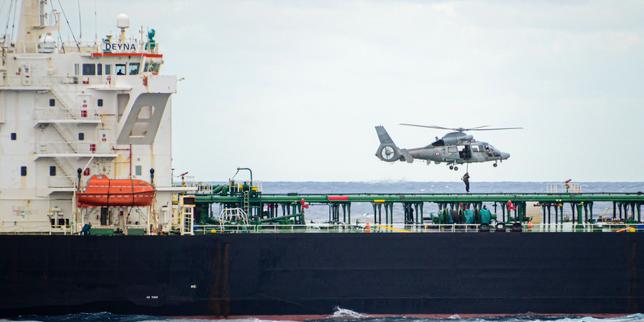
The territorial dispute over the Senkaku Islands has transitioned from a sovereignty issue to a logistical one. In 2026, the density of "Gray Zone" tactics—using coast guard and fishing vessels rather than formal naval assets—has reached a saturation point.
- The Buffer Zone Erosion: Constant proximity between the Japan Coast Guard and Chinese maritime militia has reduced the reaction time for decision-makers from hours to minutes.
- The Intelligence Tax: Both nations are now forced to allocate a disproportionate share of their national budgets to persistent surveillance (ISR) in the First Island Chain. This is a non-productive capital expenditure that drains resources from domestic social programs.
3. The Energy Transition Bottleneck
While both nations are competitors, they are also co-dependents in the green energy transition. Japan leads in hydrogen fuel cell patents, while China controls 80% of the refining capacity for the rare earth elements (REEs) required for Japan’s electric vehicle (EV) fleet. This creates a "Mutually Assured Economic Destruction" (MAED) scenario. If China cuts off REE exports, Japan’s automotive industry—the backbone of its economy—stalls. If Japan restricts precision machinery for battery production, China’s lead in the global EV market evaporates.
Quantifying the Risk of Miscalculation
Standard metrics of "tension" are insufficient to measure the current volatility. Analysts must instead look at the Probability of Kinetic Escalation (PKE). The PKE is currently driven by the narrowing gap between military capability and diplomatic communication.
The Signal-to-Noise Ratio in Crisis Management
The "hotline" established between Tokyo and Beijing remains functional but underutilized. The primary risk in 2026 is not an intentional declaration of war, but a "Tactical Accident with Strategic Consequences." A mid-air collision or a maritime ramming in the Taiwan Strait or the East China Sea triggers a sequence of automated escalation protocols.
Because Japan’s 2022 National Security Strategy allows for "counterstrike capabilities," the threshold for what constitutes a defensive action has blurred. Beijing views these capabilities as offensive, leading to a "pre-emptive defense" mindset. This logical knot ensures that any localized skirmish has a high probability of scaling into a regional blockade.
The Fragmented Economic Reality
Economic integration, once thought to be a safeguard against war, is being weaponized. We are seeing the rise of "Just-in-Case" supply chains replacing "Just-in-Time" efficiency.
Corporate Hedging and the "China Plus One" Maturity
Japanese firms are no longer merely "considering" relocation; they are executing a structural exit from the Chinese mainland for high-value components. This is not a total withdrawal but a bifurcated strategy:
- Segment A: Production for the Chinese domestic market stays in China (In China, For China).
- Segment B: Production for global markets is shifted to Vietnam, India, or back to Kyushu (Reshoring).
This fragmentation increases the unit cost of electronics and machinery globally. The "efficiency dividend" of the 2000s is officially dead. The inflationary pressure caused by this duplication of infrastructure is a permanent feature of the 2026 economy.
Financial Weaponization and Currency Maneuvers
The Yen-Yuan relationship is increasingly dictated by geopolitical signaling rather than interest rate differentials alone. As Japan aligns more closely with G7 sanctions regimes, Beijing has accelerated the development of the Digital Yuan (e-CNY) to bypass the SWIFT system. This creates a dual-track financial system in East Asia, complicating trade settlements for mid-sized Japanese enterprises that rely on Chinese suppliers.
The Taiwan Strait Variable
The most significant exogenous shock to the Sino-Japanese relationship is the status of the Taiwan Strait. For Tokyo, the "Taiwan contingency" is an existential threat to its energy security. Roughly 90% of Japan’s energy imports pass through these waters.
A blockade of Taiwan is, by definition, a blockade of Japan.
Unlike previous years where Japan remained ambiguous, the 2026 stance is one of "Integrated Deterrence." This involves the deployment of mobile missile batteries to the Nansei Islands, effectively creating a "denial zone" that complicates China’s naval maneuvers. The causal link is clear: the more Beijing pressures Taipei, the more Japan militarizes its southern islands, which Beijing interprets as an act of encirclement, prompting further pressure on Taipei.
Strategic Constraints and Policy Limitations
No single policy can resolve this tension because the underlying objectives of both states are fundamentally incompatible.
- China’s Objective: Regional hegemony and the unification of what it perceives as its sovereign territory.
- Japan’s Objective: A rules-based order that preserves the status quo and secures its maritime lifeblood.
The limitation of the "Quad" (US, Japan, Australia, India) and other security groupings is their inability to offer China a "golden bridge" to de-escalate without losing face. Conversely, the limitation of China’s "Belt and Road" diplomacy in 2026 is its failure to provide security guarantees that Japan finds credible.
The 2027 Horizon
As we move toward 2027—a year of significant political anniversaries and military milestones in China—the Sino-Japanese relationship will likely enter a phase of "Dynamic Containment." This is not a return to normalcy but a high-stakes management of friction.
The strategic play for Japan is to accelerate its "Technology Sovereign" status. This means reducing the "China Content" in its critical infrastructure to below 5% by 2028. For China, the play is "Interdependence Capture"—making its market so indispensable for Japanese luxury goods and services that the political cost of a total break becomes unbearable for Tokyo’s ruling party.
The final move in this geopolitical chess match is not a checkmate, but the establishment of a "Managed Competition" framework. This requires a formalization of the "Gray Zone" rules of engagement to prevent accidental kinetic contact. Failing this, the regional economy will continue to pay a "Risk Premium" that stifles innovation and diverts trillions into the machinery of war. The most successful actors in this environment will be those who can operate within "Segmented Supply Chains" while maintaining the diplomatic agility to pivot as the PKE fluctuates.
Would you like me to generate a breakdown of the specific Japanese chemical companies that currently hold the most leverage over the Chinese semiconductor industry?