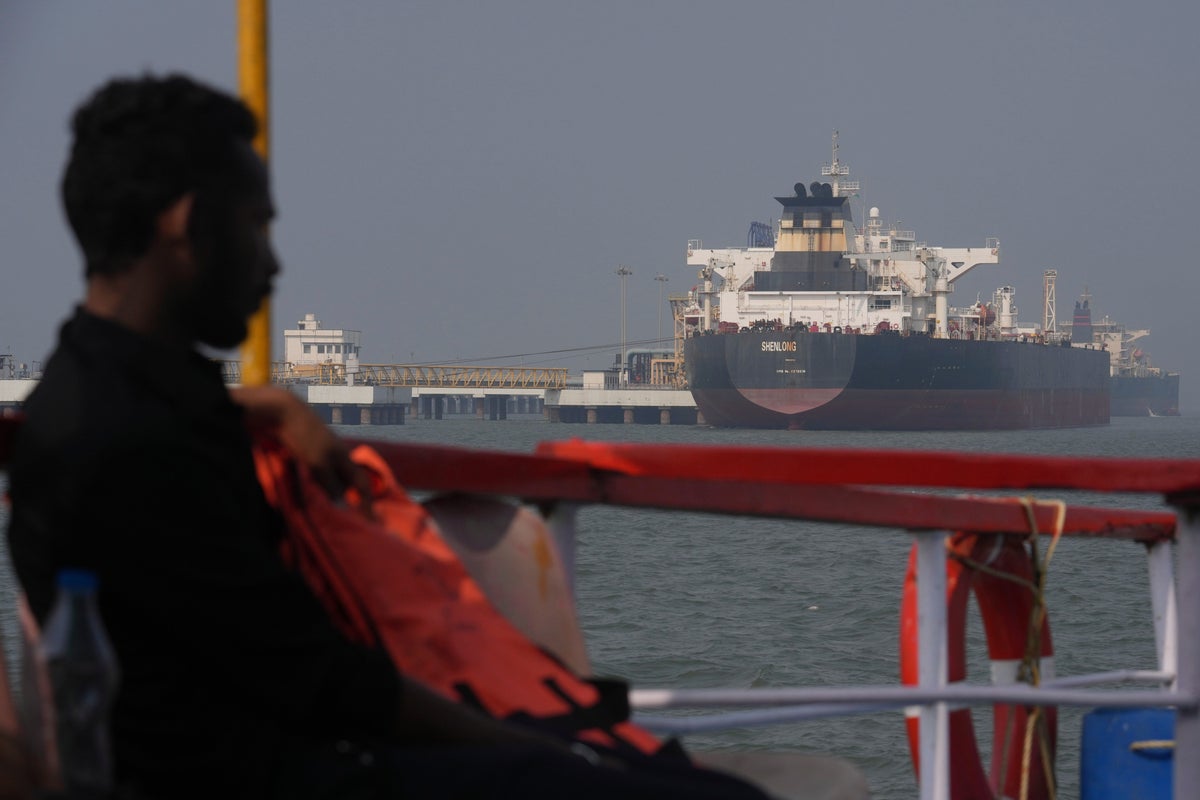
The global energy market is currently held hostage by a 21-mile-wide strip of water and a high-stakes gamble in Washington. President Donald Trump is moving toward a direct military occupation of Iran’s Kharg Island, a desperate maneuver to break the Iranian blockade of the Strait of Hormuz. This is no longer just a "blip" in the markets. Crude prices have smashed through the $120 mark as the flow of 20 million barrels per day—nearly a fifth of global supply—has effectively ground to a halt. The White House believes that by seizing Iran's primary oil export hub, they can starve the regime into reopening the shipping lanes. However, the reality on the water suggests that weaponizing commercial risk is far easier than neutralizing it with a carrier strike group.
The administration’s strategy hinges on the belief that a show of overwhelming force will restore order. It ignores the fundamental shift in how Iran is fighting this war. Tehran isn't just using traditional naval blockades; it has successfully weaponized the insurance industry and the risk tolerance of global shipping giants. When a handful of cheap drones and sea mines can turn a billion-dollar tanker into a liability that no Western insurer will touch, the physical presence of the U.S. Navy becomes secondary. Even with the 31st Marine Expeditionary Unit deployed and the potential for boots on the ground at Kharg Island, the "risk premium" remains. Traders are currently pricing in a $15 to $20 per barrel "war tax" simply because they do not believe the U.S. can guarantee a safe passage that a Maersk or Hapag-Lloyd captain will trust.
The Two Front Escalation
While the U.S. eyes the Persian Gulf, Israel is opening a massive second front. The Israel Defense Forces (IDF) have mobilized roughly 450,000 reservists for a ground incursion into southern Lebanon. This isn't a surgical strike. It is a full-scale effort to push Hezbollah back beyond the Litani River, creating what Jerusalem calls a "security buffer." This expansion of the conflict ensures that even if the U.S. manages to force a temporary opening of Hormuz, the broader regional instability will keep energy markets in a state of permanent anxiety. The "decapitate and delegate" doctrine currently driving foreign policy assumes that the U.S. can strike the head—Iran's leadership and infrastructure—while leaving the cleanup to regional allies or a shell-shocked global market.
This approach has left the American consumer exposed. Gasoline prices are surging toward $5 a gallon in several states, directly contradicting the president's campaign promise to slash energy costs. The administration has attempted to mitigate the damage by waiving the Jones Act, allowing foreign tankers to move fuel between U.S. ports, but this is a cosmetic fix for a systemic supply shock. The primary driver of the pain at the pump is the structural shortage of 7 to 12 million barrels per day that cannot be bypassed or replaced by strategic reserve releases.
The Kharg Island Gamble
Kharg Island is the jugular of the Iranian economy. Roughly 90% of Iran's oil exports pass through this five-mile-long coral outcrop. By weighing an occupation, the Trump administration is attempting to create a "reverse hostage" situation. If the U.S. controls the taps, they theoretically control the regime's survival.
Yet, military analysts warn this is a trap. Seizing the island does not stop Iran's mobile missile batteries on the mainland or its swarm of suicide drones. In fact, an American occupation of Iranian soil provides Tehran with the ultimate justification for further escalation. The U.S. Navy is reportedly hesitant, fearing that moving heavy assets into the narrow "S-curve" of the Strait will result in a repeat of the 1980s "Tanker War," but with much higher stakes and modern anti-ship technology.
Market Realities vs Political Rhetoric
The disconnect between the White House and the reality of global commodities is widening.
- Supply Gap: Global spare capacity outside of the conflict zone is negligible.
- Infrastructure Limits: Existing bypass pipelines in Saudi Arabia and the UAE can only handle about 4 to 7 million barrels per day—less than half of what is currently blocked.
- The Venezuela Factor: While the administration has eased some pressure on Caracas to bring more oil to market, the short-term uplift is a drop in the bucket compared to the Hormuz shortfall.
The administration’s "drill, baby, drill" mantra has also hit a physical wall. Domestic production is constrained by pipeline capacity and the high cost of extracting from deeper basins. You cannot solve a 20-day shipping crisis with a five-year drilling project. The market knows this, which is why the price spikes are not receding despite the aggressive rhetoric from the Oval Office.
Industry analysts at Goldman Sachs and Rystad Energy suggest that even a "victory" in the Strait wouldn't bring prices back to 2024 levels. The damage to the "tacit bargain" of regional security is done. Major shipping firms are already rerouting around the Cape of Good Hope, adding weeks to transit times and millions to operational costs. This shift is becoming the new baseline for global trade.
Congress is now showing signs of fracture. While some lawmakers demand total support for the military offensive, others are invoking the War Powers Resolution, fearing an "unauthorized and ballooning war" that has no clear exit strategy. The power of the purse may be the only thing that moves faster than an oil price spike, but with 13 U.S. service members already dead in the opening weeks of the conflict, the political cost of backing down is now as high as the economic cost of moving forward.
The standoff at the Strait is not a tactical problem that can be solved by simply parking a destroyer in the channel. It is a fundamental collapse of the security architecture that has governed the global oil trade for fifty years. As Israel pushes deeper into Lebanon and the U.S. prepares to seize Iranian territory, the world is discovering that "energy dominance" is a fragile illusion when the world's most vital chokepoint is under fire.
If you would like me to analyze the specific impact of the Jones Act waiver on U.S. domestic shipping rates, let me know.