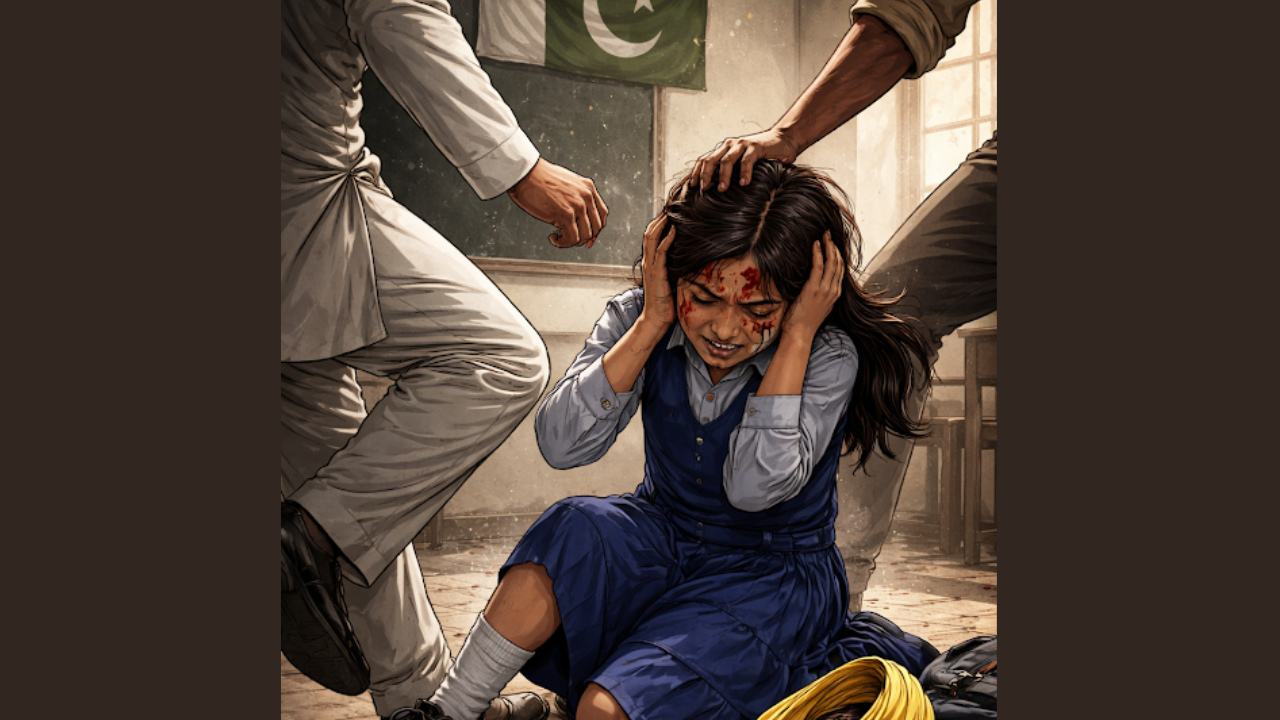
The assault on a Sikh student in Pakistan, characterized by physical torture and the forced removal of his turban, is not an isolated outburst of interpersonal violence but a predictable output of a systemic failure in the state's protective apparatus. When a minority's religious symbols are targeted alongside their physical person, the act transitions from simple assault to a ritualized assertion of dominance designed to signal the exclusion of that group from the civic fabric. Analyzing this event requires a breakdown of the structural incentives that allow such violence to persist, the breakdown of law enforcement response cycles, and the sociological impact of desecrating "Kesh" (unshorn hair)—one of the five articles of faith in Sikhism.
The Architecture of Identity-Based Targeting
To understand why a student becomes a target for such specific degradation, one must examine the intersection of social hierarchy and the perceived "otherness" of religious minorities in the region. This violence operates on three distinct levels of escalation:
- Symbolic De-personization: The removal of the turban (Dastaar) is a calculated strike against the victim’s dignity. In the Sikh faith, the turban is not a mere accessory; it is a spiritual commitment and a crown representing equality. By forcibly removing it, the aggressor attempts to strip the individual of their community-granted status and reduce them to a defenseless subject.
- Physical Coercion: The transition from verbal harassment to "kicking and punching" indicates a breakdown in the perceived cost of violence. If the perpetrator believes the legal consequences are negligible, the threshold for physical escalation drops.
- Social Signaling: These acts are often performed in public or recorded to serve as a warning to the broader minority community. The goal is to enforce a "social contract" where minorities must remain invisible or subservient to avoid similar outcomes.
The Cost Function of Impunity
The frequency of these incidents is directly proportional to the lack of swift, transparent judicial outcomes. In a functioning legal system, the "cost" of committing a hate crime includes social ostracization, heavy fines, and significant incarceration. However, when the state's response is delayed or mitigated by local power dynamics, the cost function shifts:
- Law Enforcement Inertia: Police often treat these cases as "private disputes" rather than targeted hate crimes. This misclassification ignores the underlying motivation and prevents the application of more stringent anti-terrorism or civil rights statutes.
- Judicial Bottlenecks: Even when arrests are made, the conviction rate for crimes against minorities remains statistically low. Long trial durations allow for witness intimidation, which frequently leads to out-of-court "settlements" that favor the aggressor.
- Political Calculus: In regions where religious populism is a potent political tool, local leaders may hesitate to condemn perpetrators if they belong to a dominant electoral demographic.
This environment creates a "Moral Hazard" where individuals feel empowered to act on personal biases, knowing the institutional friction required to hold them accountable is high enough to act as a shield.
Structural Vulnerabilities in Educational Environments
The fact that the victim was a student highlights a critical failure in the institutional safety of educational spaces. Schools and universities are meant to function as controlled environments where state secularism or inclusive policies are enforced. When these boundaries are breached, it suggests a "Permeable Campus" model where external societal prejudices override internal disciplinary codes.
The vulnerability of minority students can be quantified through the lack of dedicated reporting mechanisms. Most institutions lack a standardized protocol for handling religious-based bullying, leading to a reliance on general grievance cells that are ill-equipped to handle the sensitivities of religious desecration.
The Sikh Diaspora and the Geopolitical Feedback Loop
The fallout of such incidents extends beyond the immediate victim, influencing international relations and the perception of Pakistan’s human rights record on the global stage.
- The Diaspora Response: The Sikh community is globally connected. Visual evidence of a turban being removed triggers a collective trauma response across the diaspora in the UK, Canada, and the United States. This translates into diplomatic pressure on international bodies to review aid and trade agreements based on human rights benchmarks.
- State Credibility: For a state that frequently advocates for the rights of its own religious cohorts abroad, internal failures to protect its own minorities create a "Credibility Gap." This gap is exploited by geopolitical rivals to justify sanctions or to lower the state’s standing in the Global Human Rights Index.
Mechanism of the Turban Desecration
To quantify the severity of the act, one must understand the biological and theological integration of the turban. In Sikhism, the hair is kept "Kesh" (unshorn) as a mark of respect for the perfection of creation. The turban protects this hair and keeps it clean. The forced removal is therefore an assault on the physical body, the spiritual identity, and the psychological health of the individual.
The psychological impact of such an event is often characterized by:
- Acute Identity Crisis: A sudden, violent separation from one’s community markers.
- Hyper-vigilance: A persistent state of fear regarding public displays of faith.
- Community Withdrawal: A tendency for the minority group to retreat into gated or segregated enclaves to ensure safety, which further hampers social integration.
Evaluating the State's Counter-Strategy
To move beyond the cycle of outrage and apology, a structural overhaul of the response mechanism is required. The current "Reactive Model"—where arrests are made only after social media outcry—is insufficient for deterrence. A "Proactive Protective Framework" would necessitate:
- Mandatory Hate Crime Classification: Implementing legislation that automatically upgrades assault charges to hate crime status if religious symbols are targeted. This increases the minimum sentencing and removes the possibility of local police downgrading the offense.
- Independent Oversight Committees: Establishing regional boards comprised of minority representatives and human rights lawyers to monitor the progress of such cases from First Information Report (FIR) to final sentencing.
- Institutional Liability: Holding school administrators personally and professionally liable for the safety of minority students within their jurisdiction. If an assault occurs on campus, the institution must face a loss of accreditation or heavy financial penalties for failing to maintain a safe environment.
The path toward stabilizing the safety of religious minorities requires more than just judicial prosecution; it requires a recalibration of the social cost of bigotry. Until the state can guarantee that a turban is as legally protected as the person wearing it, the cycle of violence will continue to find new victims in the most vulnerable sectors of society.
Immediate pressure must be placed on the provincial government to release the specific timelines for the prosecution of the perpetrators involved in this student's case. Transparency in the sentencing phase will serve as the primary indicator of whether the state is moving toward a rule-of-law framework or continuing its trajectory of selective enforcement.