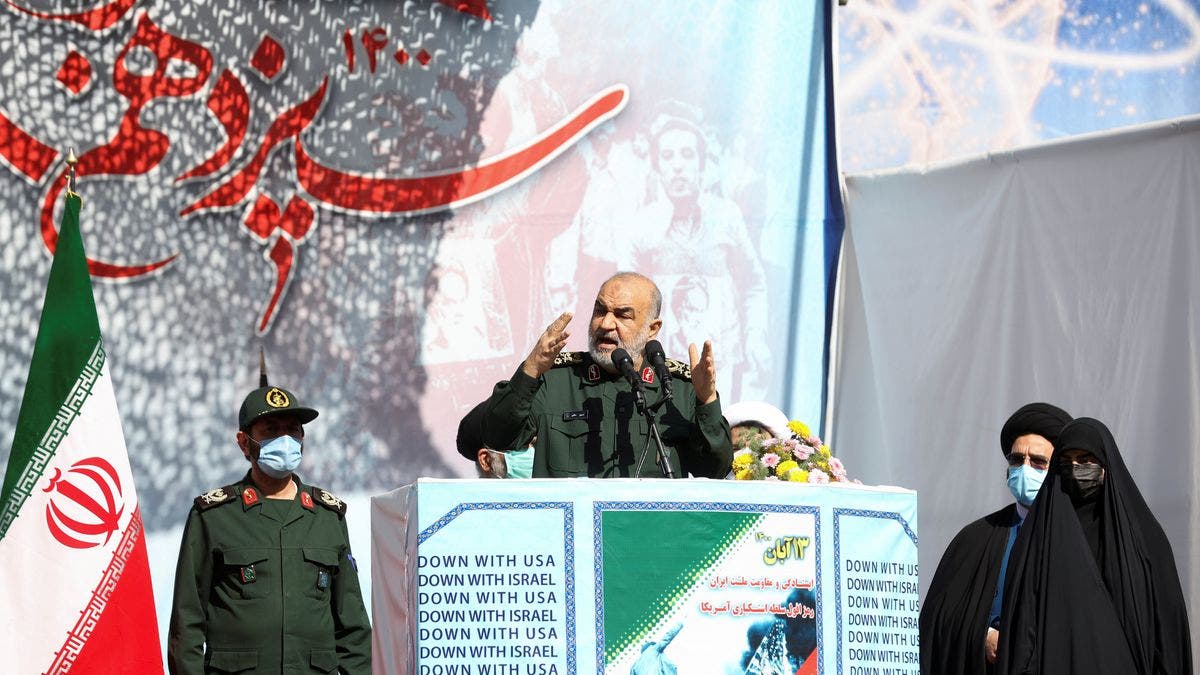
The most powerful man in Iran is currently a ghost. Since his elevation to the position of Supreme Leader following the February 28 airstrikes that killed his father, Mojtaba Khamenei has managed to lead a nation at war without once being seen or heard in person. This vacuum of presence has birthed a frantic international guessing game, one that Russia has now stepped in to arbitrate. Alexey Dedov, the Russian Ambassador to Tehran, recently broke the diplomatic silence to insist that the younger Khamenei is indeed on Iranian soil, dismissing rumors of a secret medical evacuation to Moscow. Dedov’s intervention does more than provide a location; it highlights a regime so fractured by conflict that it must rely on a foreign envoy to verify the existence of its own head of state.
The "understandable reasons" Dedov cited for Mojtaba’s absence are the open secret of the Middle East. Transitioning from a behind-the-scenes fixer to the ultimate authority while the country is under active bombardment is a lethal logistical challenge. However, the longer the silence lasts, the more it erodes the legitimacy of a succession that many reformists already viewed as a betrayal of the 1979 Revolution’s anti-monarchical roots.
The Moscow Connection and the Injury Rumors
Speculation regarding Mojtaba’s health reached a fever pitch in mid-March. Reports suggested he was not just in hiding, but "disfigured" or critically injured during the same strikes that claimed the elder Khamenei. The theory held that he had been spirited away to a Russian military hospital for specialized care, a move that would effectively turn the Iranian leadership into a subsidiary of the Kremlin.
Dedov’s denial to the outlet RTVI was surgical. By stating that Mojtaba is in Iran but "refraining from appearing in public," Russia is attempting to project stability where none exists. If Mojtaba were truly fit to lead, a thirty-second video clip would suffice to silence the skeptics. The fact that the regime relies on written statements—vague documents describing his late father as a "mountain of strength"—suggests a leader who is either physically unable to speak to his people or a security apparatus that no longer trusts its own shadows.
The Strategic Partnership Treaty signed between Tehran and Moscow last year has now become the primary scaffolding for Mojtaba’s early tenure. Russia isn't just an ally; it is the primary guarantor of the narrative.
A Dynasty Forged in the Shadows
Mojtaba Khamenei did not rise through the traditional clerical hierarchy. He is a product of the security state, a man who spent decades managing the financial and intelligence apparatus of the Office of the Supreme Leader. His relationship with the Islamic Revolutionary Guard Corps (IRGC) is the bedrock of his power.
- 1990s Emergence: He was a central figure in restructuring conservative networks after the reformist landslide of 1997.
- The Kingmaker: He is widely believed to have been the architect behind the rise of hardline figures, manipulating the internal levers of the Guardian Council.
- Sanctioned Status: In 2019, the U.S. Treasury sanctioned him for exercising official duties on behalf of his father without holding a formal post.
This background makes his current invisibility even more striking. A man who mastered the art of the "deep state" is now finding that the "front state" requires a level of public charisma he may not possess, or a level of physical safety that Iran can no longer provide.
The Legitimacy Crisis
The Assembly of Experts reportedly installed Mojtaba under intense pressure from IRGC commanders. This was not a theological consensus; it was a military coup in clerical robes. By skipping over more senior clerics like Gholam-Hossein Mohseni-Eje'i or the more popular Hassan Khomeini, the regime has signaled that it values survival over tradition.
The risk of this strategy is total alienation. For the average Iranian, the sight of a hereditary succession in a republic that was founded to end hereditary rule is a bitter pill. When that successor is also a "ghost leader" whose presence can only be confirmed by a Russian diplomat, the pill becomes impossible to swallow.
The war with Israel and the United States has accelerated these internal rot processes. While the IRGC operates on what some analysts call "autopilot," a nation without a visible figurehead lacks a psychological center. Written decrees cannot replace the Friday sermon, and an ambassador's reassurance cannot replace a heartbeat.
The Iranian leadership is betting that they can win the war before they have to show their hand. They are operating on the assumption that Mojtaba can remain a phantom until the missiles stop flying. But in the modern age of intelligence, a leader who cannot be seen is eventually assumed to be a leader who does not exist. Russia may be holding the shield for now, but they cannot provide the pulse.