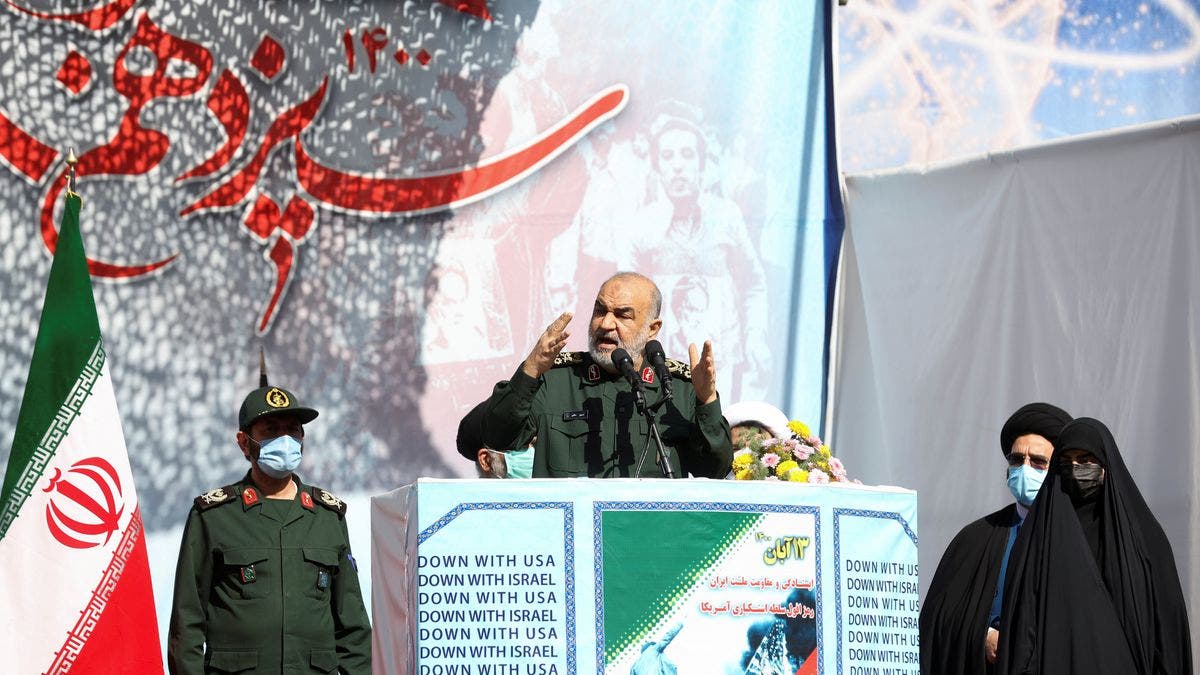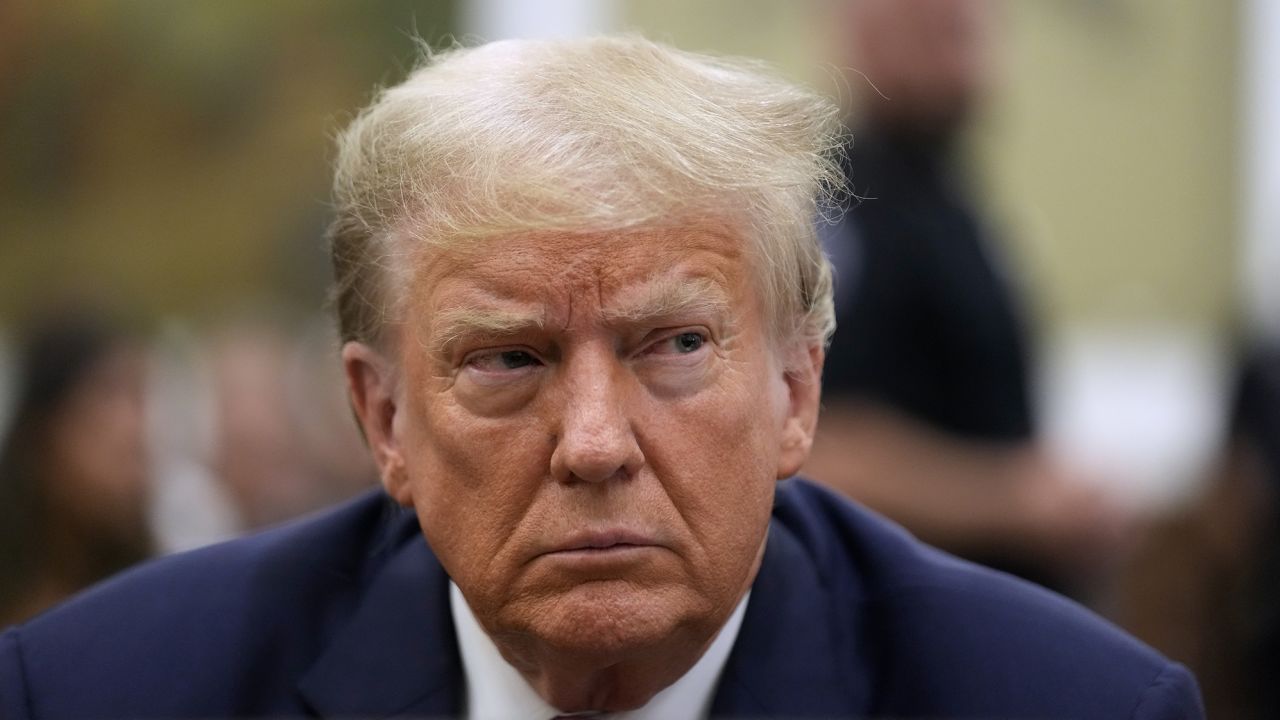
The media is eating it up again. Donald Trump stands at a podium, throws out a timeline of "two to three weeks," and claims the United States is wrapping up its involvement regarding Iran. The press handles it with their usual predictable script. Half of them treat it like a literal, binding strategic plan. The other half dismisses it as pure bluster.
Both sides are dead wrong.
They are missing the massive, grinding machinery of global energy markets and military-industrial commitments that make a clean, swift exit from Iranian containment a physical impossibility. I have spent years analyzing how geopolitical risk actually prices into global markets, watching boardrooms scramble every time a missile flies near the Strait of Hormuz. Politicians operate on election cycles. The actual forces dictating US-Iran policy operate on decades.
To believe that any president can simply flip a switch and "leave" the Iran theater in twenty-one days is to fundamentally misunderstand how modern empire and global economics work.
The Illusion of the Quick Exit
The competitor press loves a countdown. It makes for great headlines. "Trump says US to end Iran war in 2-3 weeks." It sounds decisive. It sounds like leadership.
It is also pure fantasy.
Let us dissect the anatomy of this specific brand of political theater. When a leader says they are leaving a conflict zone "very soon," they are rarely talking to military commanders. They are talking to a base of voters tired of endless foreign entanglements. It is a psychological operation, not a military one.
Look at the hard data of US military presence in the Middle East. Even when administrations actively try to pivot to other theaters, troop levels rarely drop below 30,000 to 40,000 personnel across the region. You have massive installations like the Al Udeid Air Base in Qatar and the Fifth Fleet stationed in Bahrain.
These are not chess pieces you just pick up and put in your pocket because a calendar page turned.
To dismantle these operations in three weeks would require a logistical miracle that would make the Berlin Airlift look like moving a couch. You have classified equipment, thousands of personnel, sensitive intelligence networks, and defensive batteries. Pulling them out on a whim does not create peace; it creates a vacuum that hostile actors fill before the transport planes have even cleared Iranian radar.
Why Energy Markets Forbid a Vacuum
The lazy consensus among political pundits is that the US no longer needs to police the Persian Gulf because of American shale oil. They argue that energy independence means the Middle East does not matter to the American consumer anymore.
This is the most dangerous misconception in modern geopolitics.
Oil is a fungible, globally priced commodity. If supply disrupts in the Middle East, prices spike in Chicago, London, and Tokyo simultaneously. It does not matter if a single drop of Iranian crude ever touches American soil.
Consider the geography. The Strait of Hormuz is the most crucial oil chokepoint on the planet.
According to the US Energy Information Administration (EIA), roughly a fifth of the world's petroleum liquids consumption passes through that narrow strip of water every single day.
Imagine a scenario where the US actually pulls its naval assets and deterrent posture out of the region in a matter of weeks. Insurance premiums for oil tankers in the Gulf would skyrocket instantly. Shipping companies would refuse to send vessels through the strait without military escorts. Global oil supply would effectively shrink by millions of barrels a day, not because the oil does not exist, but because it cannot be safely moved.
Do you think any administration, Republican or Democrat, is going to let global gas prices double in a month just to satisfy a campaign talking point? Not a chance. The economic suicide of a true, sudden withdrawal keeps the US locked into its containment strategy, regardless of what is said on the campaign trail.
The Credibility Trap
Let us talk about the concept of deterrence. Deterrence only works if your adversary believes you will actually follow through on your threats and maintain your commitments.
If the United States abruptly abandons its posture against Iran after decades of building a regional coalition with Gulf states and Israel, it signals to every ally that American guarantees have an expiration date measured in weeks.
I have seen companies lose massive infrastructure contracts in the region because foreign governments stopped trusting American stability and started hedging their bets with China. Geopolitics is a trust business. When you break that trust, you lose more than just a strategic foothold; you lose economic leverage for a generation.
The heavy hitters in foreign policy realism, from the late Henry Kissinger to John Mearsheimer, have drilled this point home for decades. Great powers do not just walk away from regions where they have invested trillions of dollars and established critical alliances. They adjust. They recalibrate. They reduce footprints. But they do not leave.
Claiming otherwise is a disservice to the public's understanding of how the world actually works.
Dismantling the "People Also Ask" Delusions
When people search about ending the conflict with Iran, they usually ask flawed questions based on a fundamental misunderstanding of the situation. Let us answer them bluntly.
Can the US President unilaterally end a conflict with Iran?
No. The President can issue executive orders to move troops and can certainly dictate the aggressive or passive nature of the rules of engagement. But a true "end" to the conflict requires either a formal treaty ratified by the Senate or a complete cessation of hostilities acknowledged by both sides. Iran is not a non-state actor you can just walk away from like a terrorist cell in a cave. It is a sovereign nation with a sophisticated military, a proxy network spanning several countries, and a deep-seated ideological opposition to Western hegemony in the region. You do not end a conflict with them unilaterally. They get a vote.
Will withdrawing from the Middle East save the US money?
In the short term, on a purely operational level, yes. You spend less on jet fuel and carrier strike group deployments. In the long term, absolutely not. The cost of reacting to the inevitable crisis that follows a power vacuum is always exponentially higher than the cost of maintaining a deterrent posture. We saw this play out in Iraq with the rise of ISIS after the 2011 withdrawal. The US spent billions returning to fight a threat that grew in the space left behind. True fiscal responsibility in defense requires maintaining steady, calculated pressure, not wild swings between total engagement and complete abandonment.
Why not just let regional powers handle Iran?
Because they cannot. Saudi Arabia and the smaller Gulf states have spent hundreds of billions on advanced Western military hardware, but they lack the integrated command structure, logistics, and heavy power projection capabilities required to effectively contain Iran on their own. Without the US acting as the security architecture's backbone, the region devolves into a direct, hot war between Riyadh and Tehran. That war would wreck the global economy within forty-eight hours.
The Brutal Truth About Military Action
Let us get aggressive about the actual military mechanics here.
Politicians talk about "ending" things because it sounds tidy. Wars do not end cleanly. They mutate.
If the US reduces its conventional footprint, it simply forces the conflict into the shadows. We swap aircraft carriers for cyber warfare and special operations. We swap public troop deployments for increased intelligence sharing and green-lighting proxy strikes by regional allies.
This is the nuance the competitor article missed entirely. They treated "leaving" as a binary state. Either we are there with boots on the ground, or we are gone.
The reality is a grey zone of permanent, low-intensity conflict.
To suggest that a 2-3 week timeline means the end of US involvement with Iran is to ignore how the modern US military operates. The US has been engaged in low-grade conflict with Iranian interests since 1979. It happens in the banking system through sanctions. It happens under the ocean with cut fiber-optic cables. It happens in the digital ether with Stuxnet-style malware attacking nuclear centrifuges.
You cannot withdraw from a cyber battlefield. You cannot pull out of a global financial system where you are using the dollar as a weapon to starve the Iranian regime of hard currency.
Stop Looking for the Exit Door
Here is the unconventional advice for businesses, investors, and citizens trying to make sense of this rhetoric: stop waiting for the "aftermath."
There is no post-conflict era coming with Iran.
We are living in the permanent state of the conflict. The friction between a revolutionary theocracy seeking regional dominance and a global superpower trying to maintain the economic status quo is a feature of the modern world, not a bug that can be patched in three weeks.
Smart capital does not bet on a withdrawal. Smart capital hedges against the inevitable flare-ups.
If you are running a supply chain that relies on stable energy prices, you do not dismantle your hedges because a politician made a campaign promise. You double down on them. You look at the history of these announcements. They are cyclical. They happen before major political events, and they quietly fade away when the hard realities of National Security Council briefings hit the desk of the commander-in-chief.
The downside to this realistic, contrarian view is that it is grim. It does not offer the dopamine hit of believing that peace is just around the corner or that trillions of dollars can suddenly be redirected to domestic projects. It acknowledges that maintaining a global empire is a exhausting, expensive, and often morally compromised endeavor.
But it is the truth.
The next time you see a headline claiming a massive, decades-old geopolitical conflict is going to be wrapped up in a matter of weeks, do not debate whether it is a good idea or a bad idea. Recognize it for what it is: a fairy tale sold to a public that desperately wants to believe complex global problems have simple, fast solutions.
The machinery of the global economy and military strategy grinds on, indifferent to the speeches, demanding presence, demanding deterrence, and forbidding any leader from truly walking away.