A small wooden crate sits on a rain-slicked pier in Mumbai, its corners reinforced with rusted steel. Inside, there are no gold bars or high-tech microchips. It holds mid-range industrial valves, the kind of unglamorous hardware that keeps the world’s plumbing from bursting. To the man checking the manifest, those valves represent three months of missed sleep and a daughter’s university tuition. But across the ocean, in a climate-controlled office in Washington D.C., that same crate is no longer hardware. It has been transformed into a data point in a Section 301 investigation.
This is how modern trade wars begin. Not with a shot, but with a spreadsheet.
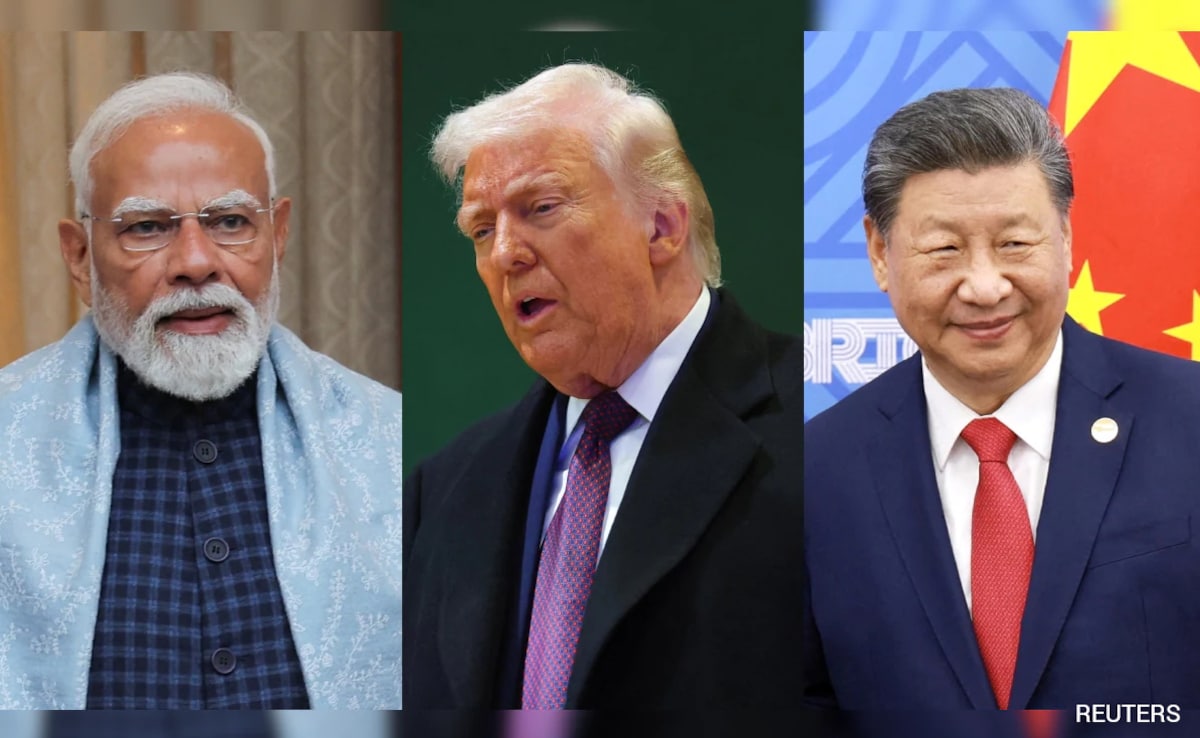
The news broke like a sudden shift in barometric pressure. The United States announced it was initiating "301" tariff probes into 16 of its trading partners, including giants like India and China. To the casual observer, "Section 301" sounds like a dry piece of bureaucratic filing, perhaps something to be tucked away in the back of a legal textbook. In reality, it is a blunt instrument of economic pressure, a relic of the 1974 Trade Act that grants the American presidency the power to investigate and punish "unfair" trade practices.
The world woke up to find the rules of the game had changed overnight.
The Paper Fortress
Imagine a marketplace where everyone has agreed on the price of bread. You’ve spent years perfecting your recipe, lowering your costs, and building a stall. Then, the owner of the town’s largest mill decides that because you don't buy his specific brand of yeast, your bread now costs twice as much to bring through the front gate. You haven't changed your quality. You haven't cheated. But the gate has grown taller.
That is the essence of a Section 301 probe. It isn't a settled tax; it is a threat of one. It signals that the U.S. Trade Representative (USTR) is looking at the digital taxes, the subsidies, and the intellectual property laws of other nations and finding them wanting. For India and China, this is a familiar friction. For the other fourteen nations caught in the dragnet, it feels like a sudden tightening of a collar.
The stakes are rarely about the specific products listed on the manifests. They are about leverage. When Washington looks at New Delhi’s taxes on American tech giants, or Beijing’s grip on green energy supply chains, they see a lopsided scales. The 301 probe is the finger on the scale, intended to force a negotiation before the first actual tariff is ever collected.
But leverage has a human cost.
The Ghost in the Supply Chain
Consider the "just-in-time" world we inhabit. A smartphone is not made in one place; it is a traveler. Its soul might be designed in California, but its heart is forged in Taiwan, its casing molded in Vietnam, and its assembly finished in Shenzhen. When a Section 301 probe hangs over a country, it acts like a fog.
Investors hate fog.
If you are a manufacturer in Vietnam or a garment exporter in Bangladesh, your entire business model relies on a predictable margin. You work on percentages so thin they could cut paper. A 25% tariff doesn't just eat your profit; it swallows your company whole. When these probes are announced, the immediate reaction isn't a change in law—it's a pause in breath. Contracts are delayed. Expansion plans are shelved. The uncertainty is the first tax, and it is paid by everyone from the CEO to the person operating the sewing machine.
The "unfairness" cited in these probes often centers on "Digital Service Taxes." Many countries argue that if an American tech company makes billions from their citizens' data, that country deserves a slice of the tax pie. The U.S. views this as a targeted attack on its most successful exports. It is a clash of philosophies: the sovereignty of the border versus the borderless nature of the internet.
The Weight of the 301 Label
To understand why this specific legal mechanism is so potent, we have to look at its history. Section 301 was the "Big Stick" of the 1980s, used to pry open Japanese markets for American cars and semiconductors. It fell out of favor when the World Trade Organization (WTO) was created, as the world moved toward a system of collective policing.
That era of collective trust is over.
By bypassing the slow, grinding gears of international courts, the 301 probe allows a single nation to act as judge, jury, and executioner in its own trade disputes. It is an admission that the old ways of talking have failed. For India, a country trying to position itself as the "plus one" in a "China Plus One" strategy, being lumped into a trade probe with China is a stinging blow. It complicates the narrative of a seamless partnership.
The complexity of these probes is often buried in the "PPA" or "People Also Ask" sections of the mind. People want to know: Will my laptop be more expensive? Will this start a recession? The answer is never a simple yes or no. It is a slow-motion ripple. A tariff on steel in 2026 doesn't just make a car more expensive tomorrow; it makes a bridge project in Nebraska more expensive three years from now. It makes a developer in Bangalore choose a local software suite over an American one. The walls don't just go up; they stay up.
The Ripple on the Pier
Back on that pier in Mumbai, the man with the valves doesn't care about the 1974 Trade Act. He cares about the "Special 301" report, a specific subset of this law that monitors intellectual property rights. If his country is placed on a "Priority Watch List," his bank might raise the interest rate on his business loan, fearing the coming instability.
He is the invisible stakeholder. He is the person for whom "trade policy" isn't a headline, but a ceiling.
We often speak of trade in terms of "balances" and "deficits," as if the world were a simple checkbook. But a trade deficit is just a reflection of where people choose to put their money. When we use 301 probes to force those choices, we are attempting to engineer the wind. Sometimes it works, and a market opens. More often, the wind just blows harder from the other direction.
The 16 nations currently under the microscope represent a massive portion of the human population. This isn't a skirmish; it's a realignment. It is the sound of the world’s largest economy clearing its throat and reminding everyone that the gate is still hers to guard.
The tragedy of the "301" is that it assumes trade is a zero-sum game—that for one person to win, another must lose. But on the piers, in the factories, and in the glowing screens of the home offices, trade is something else. It is the way we stay connected. It is the way a valve from Mumbai finds its way to a basement in Ohio.
When you look at the list of 16 partners, don't see a list of competitors. See a web of dependencies. Every probe is a tug on that web. Pull too hard, and the whole thing doesn't just change shape; it snaps.
The crate in Mumbai is still sitting there, waiting for the paperwork to clear. The fog hasn't lifted yet. In fact, it's getting thicker.