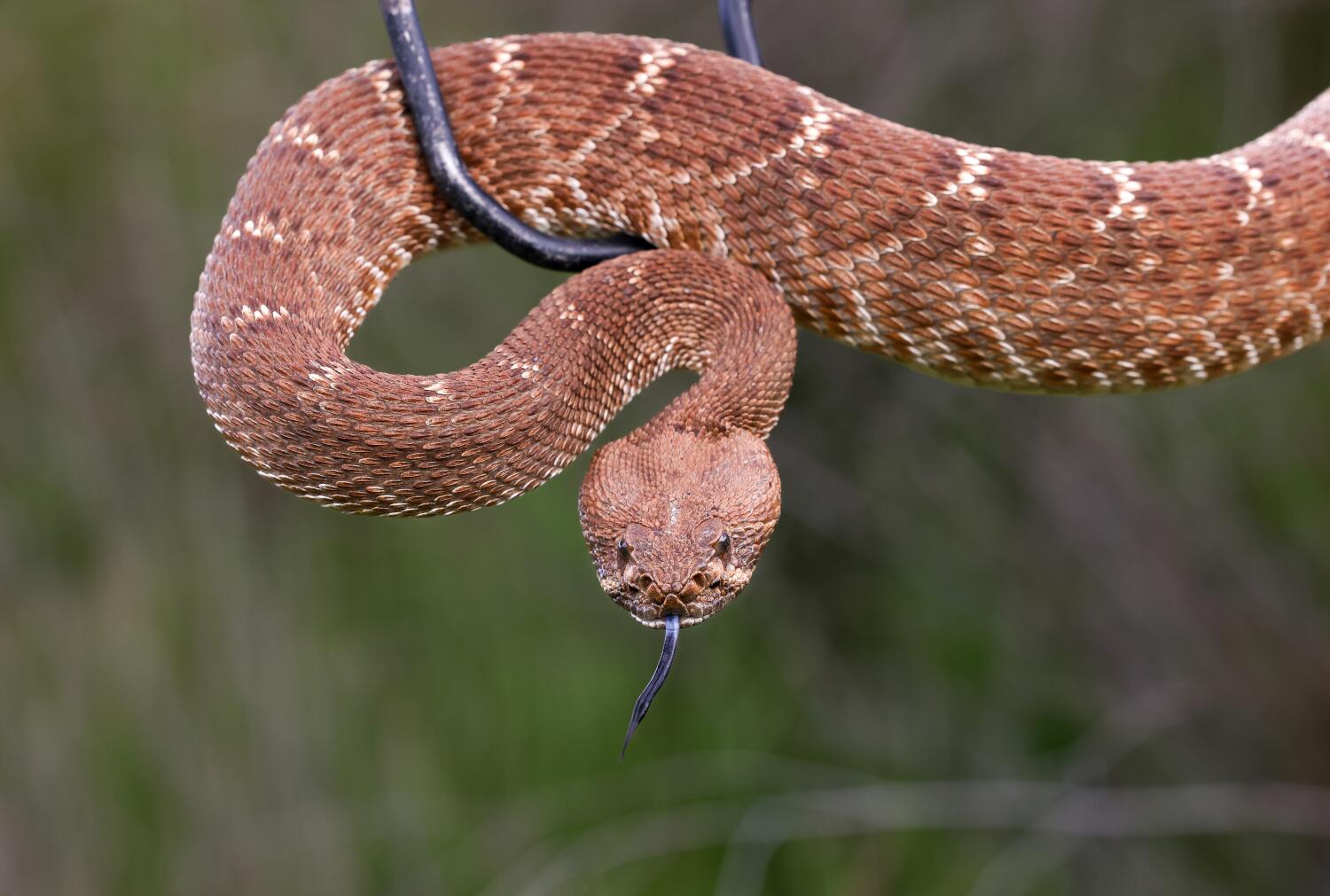
If you feel like you are seeing more rattlesnakes in places they don't belong, you are right. It isn't just a spike in sightings or a trick of the social media algorithm. We are currently witnessing a massive behavioral shift in pit viper populations across North America, driven by a volatile mix of extreme hydrological cycles and aggressive suburban sprawl. The traditional "snake season" has effectively collapsed. What used to be a predictable window of activity between April and October has transformed into a year-round threat, as snakes are forced out of their natural hibernacula by flooding and into residential "islands" that offer the only reliable thermal cover left.
The current chaos isn't about an explosion in snake numbers. It is about displacement. For decades, hikers and homeowners relied on a basic understanding of rattlesnake biology: they stay away from people, they sun themselves on rocks, and they go dormant when the mercury drops. Those rules are being rewritten in real-time.
The Flooding of the Underground
The primary engine behind this "weird" season isn't heat—it is water.
In the American West and Southwest, record-breaking atmospheric rivers and sudden, intense snowmelts have physically reclaimed the subterranean world. Rattlesnakes spend the winter in dens called hibernacula, which are often deep rock crevices or abandoned rodent burrows. When these spaces flood, the snakes have two choices: drown or move.
We are seeing "washout" events where entire colonies are pushed into the open during months when they should be invisible. Because these snakes are cold and vulnerable, they don't behave with their usual defensive caution. They seek the nearest dry, dark, and thermally stable environment. Often, that is a crawlspace, a garage, or the underside of a concrete patio.
This creates a dangerous proximity issue. A snake that is "washed out" is a stressed snake. The traditional warning signs—the rattle and the retreat—are often bypassed in favor of a desperate, stationary defense. You aren't stepping on a snake that’s crossing a trail; you are reaching for a garden hose and touching a snake that has been living under your housing for three weeks because its home is underwater.
The Mirage of Urban Greenbelts
Urban planning has inadvertently created a "buffet and bunker" system for vipers. As we build further into the wildland-urban interface, we leave behind small strips of "protected" land or golf courses. We call this conservation. The snakes call it a trap.
These greenbelts provide a high concentration of rodents, thanks to human waste and bird feeders. However, they lack the vast, connected territory snakes need to migrate safely. When a young rattlesnake—often called a neonate—is born in one of these pockets, it doesn't have the space to find a remote territory. It stays local. This leads to a higher density of snakes in a smaller area, increasing the statistical likelihood of a human-canine-snake encounter.
The Myth of the Silent Rattler
There is a persistent rumor among outdoorsmen that rattlesnakes are "evolving" to lose their rattles to avoid being killed by humans or feral hogs. This is largely a misunderstanding of selection pressure.
While it is true that a snake that rattles is more likely to be spotted and killed, there is no genetic evidence of a widespread mutation causing "silent" snakes. What people are actually experiencing is a change in defensive thresholds. If a snake is cold, or if it has been repeatedly exposed to human vibration without being harmed, it may choose cryptic coloration (camouflage) over auditory signaling. It isn't that they can't rattle; it’s that they’ve learned that staying still and quiet is a more effective way to survive in a high-traffic suburban environment.
The Economic Reality of Envenomation
If you are bitten, the crisis shifts from the biological to the financial. The United States remains one of the only places in the world where a snakebite can result in a $150,000 medical bill.
The cost of CroFab or Anavip (the two primary antivenoms used in the U.S.) is astronomical, often ranging from $3,000 to $5,000 per vial. A severe envenomation from a Western Diamondback or a Mojave Green might require 10, 20, or even 30 vials. When you factor in ICU costs, specialized pharmacy fees, and physical therapy, the "weird snake season" becomes a potential bankruptcy event.
Insurance companies often push back on the "medical necessity" of high-vial loads, leaving patients in a lurch. This creates a secondary danger: people hesitating to seek treatment because they fear the debt more than the tissue necrosis. This hesitation is a gamble with your life. A rattlesnake's venom is a complex cocktail of hemotoxins and neurotoxins that begin breaking down cellular walls within minutes. By the time the pain becomes "unbearable," the damage to the limb may already be permanent.
Decoding the Mojave Influence
One of the most concerning shifts in recent years is the expanding range of the Mojave Rattlesnake (Crotalus scutulatus). While most rattlesnake bites primarily cause local tissue damage and internal bleeding, the Mojave carries Type A venom, which contains a potent neurotoxin.
This neurotoxin blocks the signals from your nerves to your muscles. It can lead to respiratory failure without the massive swelling usually associated with snakebites. As climate patterns shift and deserts expand, the Mojave's range is creeping into areas previously dominated by the less-toxic Western Diamondback. For the average person, these snakes look nearly identical. This makes the "wait and see" approach to a bite even more lethal. If you are in a transition zone, you cannot assume a "dry bite" or a "mild bite" based on the lack of immediate swelling.
The Failure of "Repellents" and Folklore
The market is flooded with products claiming to keep snakes away—sulfur pellets, cinnamon oil, even ultrasonic vibrating stakes.
None of them work. The investigative reality is that snake "repellents" are a multi-million dollar industry built on junk science. A rattlesnake’s primary sensory organ is the Jacobson’s organ, which "tastes" the air. They are not deterred by smells that humans find offensive. In fact, many chemical repellents can actually irritate the snake and make it more aggressive or likely to hide in a spot where it feels protected, which is exactly what you don't want.
The only effective "repellent" is habitat modification. This is the hard truth that homeowners hate to hear because it requires work.
- Remove the "Three S's": Shelter, Snacks, and Sources of water.
- Clear the Perimeter: If you have brush, woodpiles, or heavy ground cover against your foundation, you have built a snake hotel.
- Rodent Control: If you have mice, you will have snakes. Period. Stop using bird feeders that drop seed on the ground and attract rodents.
How to Exist in the New Normal
We have to stop viewing rattlesnakes as a seasonal anomaly and start viewing them as a permanent part of the suburban infrastructure, much like coyotes or hawks. They are here because we have created a perfect environment for them, even as we destroy their original homes.
If you encounter a snake on your property, do not try to kill it with a shovel. Most bites occur when a person attempts to interact with, move, or kill the animal. A snake’s striking distance is roughly one-third to one-half of its body length, but they are lightning-fast and can strike in any direction. If you find one in your yard, give it a wide berth and call a professional relocation service. These experts don't just move the snake; they track where it came from to identify the "breach" in your property’s defenses.
The "weirdness" of this season is actually a warning. It is a sign of a landscape that is no longer in equilibrium. As the weather becomes more erratic and we continue to push the boundaries of the wild, the friction between humans and vipers will only intensify.
Stop looking at the calendar to decide if it is safe to go outside. Start looking at the ground.
Keep your dogs on a short leash, especially near tall grass or rocky outcrops. Carry a cell phone. Learn the route to the nearest Level 1 trauma center. In an era where the seasons no longer follow the rules, your only real defense is a constant, calculated state of awareness.