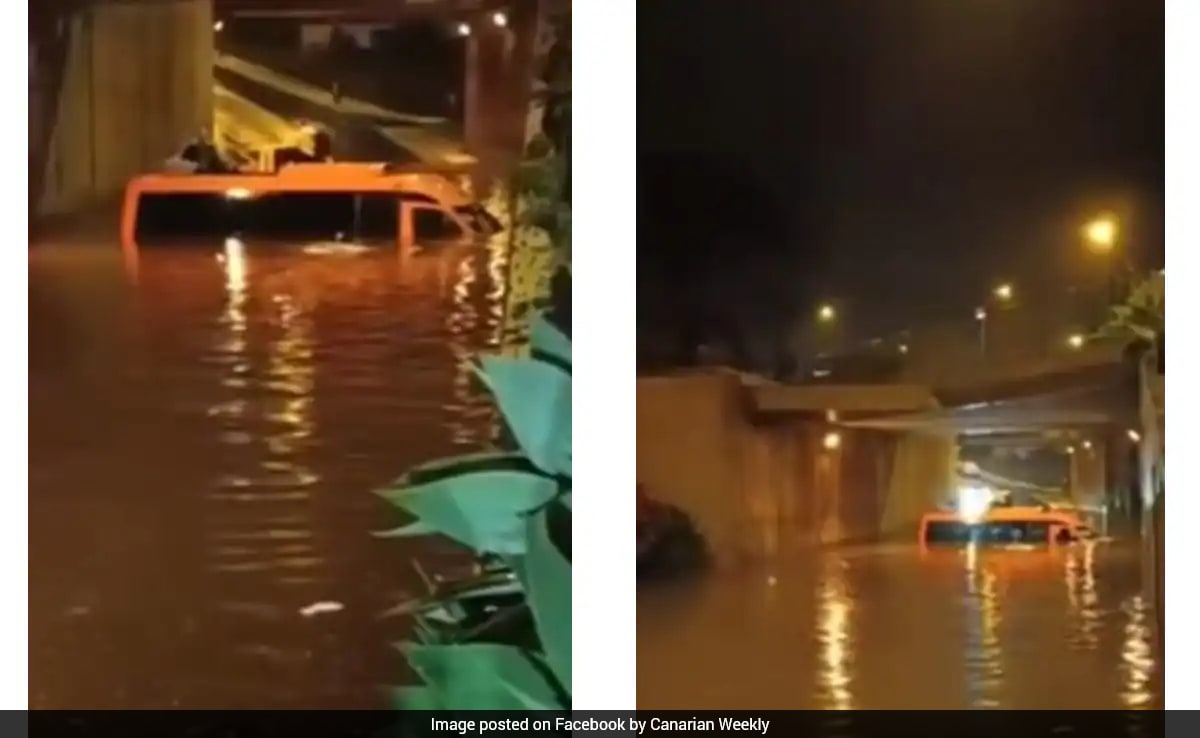
The image of British tourists clinging to the roof of a white minibus in the middle of a Spanish torrent is more than a viral moment. It is a damning indictment of a travel industry that has prioritized convenience and "off-the-beaten-path" experiences over the fundamental reality of a changing climate. When the storm hit, turning dusty dry creek beds into lethal chutes of mud and debris, the margin for error evaporated. Those travelers survived because of luck and the bravery of local emergency responders, but the systemic failures that put them on that roof remain unaddressed.
The Mediterranean "Dana" or high-altitude isolated depression is not a new phenomenon, but its intensity is shifting. For decades, the logic of tourism in regions like Andalusia or the Valencia coastline relied on predictable seasonal patterns. You booked a flight, you rented a car or hopped a private transfer, and you assumed the infrastructure beneath your wheels was built to handle whatever the sky threw at it. That assumption is now a dangerous relic. The incident involving the stranded minibus reveals a critical disconnect between meteorological warnings and the operational reality of local transport.
The Mechanics of a Mediterranean Death Trap
To understand why a professional driver ends up stalling in a rising tide, you have to understand the geography of the Spanish interior. Much of the terrain consists of "ramblas"—dry riverbeds that stay parched for 350 days a year. Local infrastructure often treats these as minor inconveniences, routing secondary roads directly through them via low-water crossings.
When a Dana event occurs, the air cools rapidly at high altitudes while the sea remains warm. This creates a vertical vacuum that sucks moisture upward, dumping months of rain in a matter of minutes. The water doesn't soak in; it hits the sun-baked, impermeable soil and accelerates. By the time a driver sees the water, it isn't a puddle. It is a wall.
A standard minibus weighs roughly 3,500 kilograms. It feels substantial. However, physics is indifferent to the perceived weight of a vehicle. Once water reaches the chassis, buoyancy begins to take effect. If the water moves at just 15 kilometers per hour, it exerts enough lateral force to sweep a heavy vehicle off the asphalt. The tourists on that roof weren't just "stranded"; they were seconds away from being rolled into a debris field where survival rates drop to near zero.
The Information Gap Between Radar and Road
The most glaring failure in these scenarios is rarely a lack of data. Spanish meteorological agencies, such as AEMET, are world-class. They issued the red alerts. They sent the pings. The breakdown happens at the "last mile" of communication.
Tourists arriving from the UK or Northern Europe often lack the cultural context to respect a "rain" warning in Spain. In London, rain is a persistent drizzle that ruins a haircut. In Malaga or Almeria, rain is a geological force that reshapes the map. We are seeing a massive failure in how travel agencies and transport providers relay risk.
- Transport Pressure: Drivers are often under immense pressure to complete transfers to avoid negative reviews or penalties from booking platforms.
- Language Barriers: Emergency broadcasts on local radio are rarely mirrored in English or German in real-time.
- GPS Over-Reliance: Navigation apps frequently suggest "fastest" routes that utilize rural backroads and rambla crossings, oblivious to the fact that those roads are currently underwater.
Why the Travel Industry Ignores the Red Flags
The travel sector operates on thin margins and high volume. Admitting that a destination is potentially lethal during certain weather windows is bad for business. Instead of rigorous safety protocols, we see a reliance on "act of God" clauses in contracts that absolve providers of liability when things go south.
The reality is that these events are no longer "black swans." They are predictable, recurring risks. An investigative look at the logs of regional emergency services shows a pattern: the vast majority of water rescues involve non-locals. This suggests that while residents know to stay home when the sky turns a specific shade of bruised purple, the "tourist bubble" remains tragically opaque.
We have entered an era where "informed consent" in travel must include a briefing on local environmental hazards. If you are traveling through the mountainous regions of the Mediterranean during the autumn, you are entering a high-risk zone. The industry refuses to say this out loud because it disrupts the fantasy of the perpetual sun.
The False Security of the Modern Fleet
There is a psychological trap in modern vehicle design. Inside a climate-controlled, sound-dampened minibus, you feel insulated from the world. This "armored" feeling leads to poor decision-making. Drivers and passengers alike assume that the vehicle's technology can overcome the elements.
In reality, the electronics that make modern vehicles comfortable are their greatest weakness in a flood. A single short-circuit in the ECU (Engine Control Unit) can lock the doors, trap the windows, and kill the engine, turning a $60,000 van into a steel coffin. The tourists in this recent rescue were lucky the driver had the presence of mind to get them onto the roof before the electrical system succumbed to the silt-heavy water.
The Economics of Recovery
Beyond the immediate human cost, there is a mounting economic toll that the travel industry is desperate to hide. Every time a helicopter is dispatched to pluck a group of holidaymakers off a roof, the taxpayer picks up a bill that runs into the tens of thousands of euros. There is a growing movement in European local governments to start billing the individuals—or their insurance companies—for rescues resulting from "gross negligence," such as driving past a closed-road sign.
If insurance premiums begin to reflect the true risk of Mediterranean flash flooding, the cost of a weekend getaway to the Costa del Sol will spike. This is the "hidden tax" of climate volatility that no one wants to talk about. We are subsidizing the risk of these trips through public emergency funds, effectively rewarding reckless travel planning.
Rebuilding the Protocol
Safety shouldn't be a lucky break. To stop these incidents from becoming mass-casualty events, the structure of regional tourism needs a hard reset.
- Mandatory Fleet GPS Geo-fencing: Transport companies should utilize systems that automatically flag or disable routes through known flood zones when a red alert is active.
- Direct-to-Tourist Alerts: Travel apps and booking engines should be legally required to push local emergency alerts to users based on their real-time location.
- Infrastructure Hardening: Spain's secondary road network requires a massive overhaul to replace low-water crossings with elevated bridges, a project that would cost billions and take decades.
The "Storm of the Century" is a tired headline. We have a "Storm of the Century" every eighteen months now. Continuing to treat these events as freak accidents is a lie. They are the new baseline. If you find yourself on a bus in a foreign country and the road ahead looks like a river, do not trust the driver's bravado or the vehicle's weight. Trust the water. It always wins.
Verify the route yourself. If the local authorities say stay put, stay put. No flight home is worth a seat on a sinking roof.
Check your travel insurance policy today for "search and rescue" exclusions before your next trip into a volatile climate zone.