The assumption that naval dominance automatically translates to the control of narrow waterways is a strategic fallacy. In the contemporary conflict between the United States, Israel, and Iran, the battle space has shifted from open-water fleet engagements to the weaponization of geography. Iran’s defensive architecture around the Strait of Hormuz, Kharg Island, and the Chabahar Port is not a conventional military deployment; it is an asymmetric economic denial system designed to exploit global supply chain dependencies.
To analyze the current friction points, one must deconstruct the theater into operational variables, stripping away political rhetoric to examine the raw mechanics of maritime interdiction and infrastructure vulnerability. For another perspective, see: this related article.
The Tri-Node Architecture of Iranian Maritime Strategy
The current standoff is concentrated on three distinct geographic nodes. Each serves a specific function within Iran's economic and military calculations, and each presents a unique friction point for coalition forces.
1. The Export Hub: Kharg Island
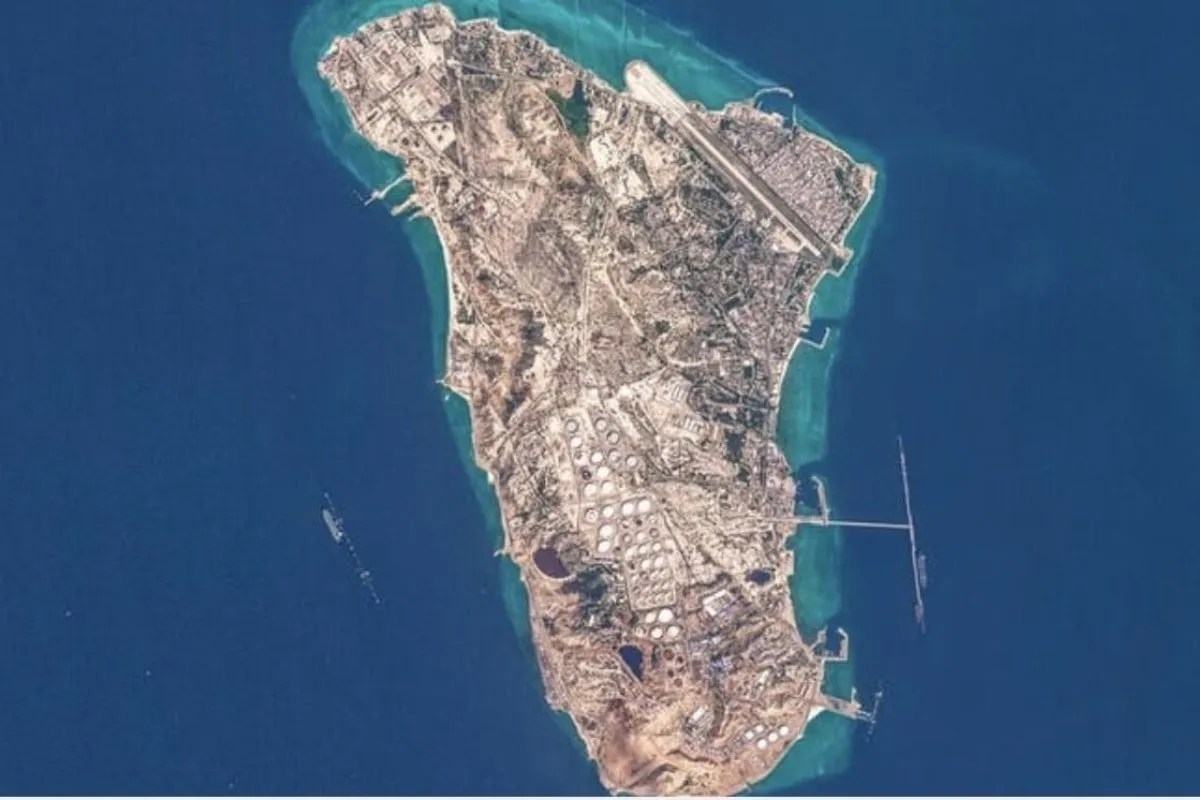
Kharg Island is the terminal node of the Iranian economy. Spanning just 20 square kilometers and located 25 kilometers off the Iranian mainland, the island handles approximately 90% of Iran’s crude oil exports. Related coverage on this matter has been published by The New York Times.
- The Operational Bottleneck: The island contains over 50 storage tanks with a capacity exceeding 34 million barrels. While coalition strikes have degraded peripheral anti-aircraft systems (such as aging HAWK batteries), the core oil infrastructure remains intact.
- The Friction of Occupation: Seizing Kharg Island is logistically fraught. Layered defenses—including man-portable air-defense systems (MANPADS), anti-personnel mines, and coastal artillery—command the landing zones. Because the island is within range of mainland Iranian artillery, any occupying force would be subjected to continuous, sustained bombardment.
2. The Transit Chokepoint: The Strait of Hormuz
Hormuz is the world’s most critical energy chokepoint, where inbound and outbound shipping lanes are only two miles wide.
- The Insurance Mechanism: Iran does not need to physically sink every ship to close the strait. By deploying fast attack craft, naval mines, and drones, it triggers a de facto closure. When maritime insurers withdraw coverage due to heightened kinetic risk, commercial traffic halts autonomously.
- The Affiliation Model: Current data indicates that while Western-linked commercial traffic has frozen, selective transit is occurring. Non-aligned or high-risk "shadow" vessels continue to pass, effectively creating a tiered access model controlled by Tehran.
3. The Outer Flank: Chabahar Port
Located on the Gulf of Oman, Chabahar sits outside the immediate bottleneck of Hormuz.
- The Strategic Value: Chabahar was designed as a bypass mechanism to access Indian Ocean trade without entering the Persian Gulf. Recent kinetic activity in the Chabahar Free Trade Zone underscores its role as a secondary military and logistics hub. Targeting this node isolates Iran’s ability to project power into the Arabian Sea.
The Cost Functions of Kinetic Escalation
Standard military analysis often treats infrastructure destruction as a binary win-loss metric. A data-driven approach requires calculating the reciprocal cost functions of any offensive action.
The Escalation Reciprocity
Kinetic actions do not occur in a vacuum. The theater operates on a strict model of proportional retaliation. When offshore gas fields or coastal assets are targeted, the response shifts laterally to regional energy infrastructure. This expands the conflict's economic footprint to neutral third-party states, hitting refineries and desalination plants across the Gulf.
The Ordnance Cost Asymmetry
A structural defect in coalition defense is the interceptor-to-threat cost ratio.
- Offense Costs: Loitering munitions, shore-based anti-ship cruise missiles, and ballistic missiles are cheap to manufacture and deploy in volume.
- Defense Costs: High-grade naval interceptors cost millions of dollars per unit.
A saturation attack utilizing low-cost drones can deplete a destroyer’s magazine. Once the magazine is exhausted, the vessel must retreat to a secure port to rearm, creating temporary windows of vulnerability. The cost of playing defense in a confined waterway is structurally higher than the cost of playing offense.
Structural Limitations of Coalition Responses
Military planners face three distinct bottlenecks when attempting to reopen or secure these waterways.
- The Limits of Convoy Operations: While naval escorts protect specific ships, they cannot safeguard the entire commercial fleet. A single residual missile hit on a merchant vessel is sufficient to keep commercial insurance premiums at prohibitive levels.
- The Information Degradation: Heavy GPS jamming and spoofing in the Persian Gulf and the Gulf of Oman degrade situational awareness. This increases collision risks and generates false compliance alerts, further suppressing commercial appetite for transit.
- The Twin-Chokepoint Leverage: Threatening Kharg Island or Hormuz expands the threat matrix to the Bab el-Mandeb strait. By utilizing proxy networks in Yemen, Iran can squeeze both the Persian Gulf and the Red Sea simultaneously. Forcing traffic to divert around the Cape of Good Hope adds weeks to transit times, absorbing global shipping capacity and driving up freight rates.
Tactical Equilibrium and Market Realities
Energy markets do not react to the physical destruction of oil; they react to the risk of future disruption. Sustained crude prices above threshold levels create severe domestic economic friction for importing nations.
To counteract this, policymakers utilize strategic petroleum reserves to bridge supply gaps. However, reserves are finite inventory. They buffer short-term shocks but cannot solve a prolonged structural blockage of a major waterway.
The structural floor for the conflict is set by external actors who absorb the exports. If primary buyers continue to purchase oil via non-standard financial channels and covert tanker fleets, the target state retains its primary revenue stream regardless of conventional sanctions.
The final strategic play cannot rely on a localized ground assault or a temporary naval sweep. Durable maritime security requires establishing a credible counter-threat to the adversary's own ability to utilize the waterway. Rather than committing ground forces to a fortified island where they become static targets for mainland artillery, the objective must shift to offshore interdiction. By tracking, diverting, and impounding shadow tankers between the Strait of Hormuz and the Strait of Malacca, coalition forces can disrupt the cash flow without putting boots on a hostile shore. This applies financial pressure at the point of sale rather than at the point of production, negating the tactical advantages of the adversary's home-turf geography.