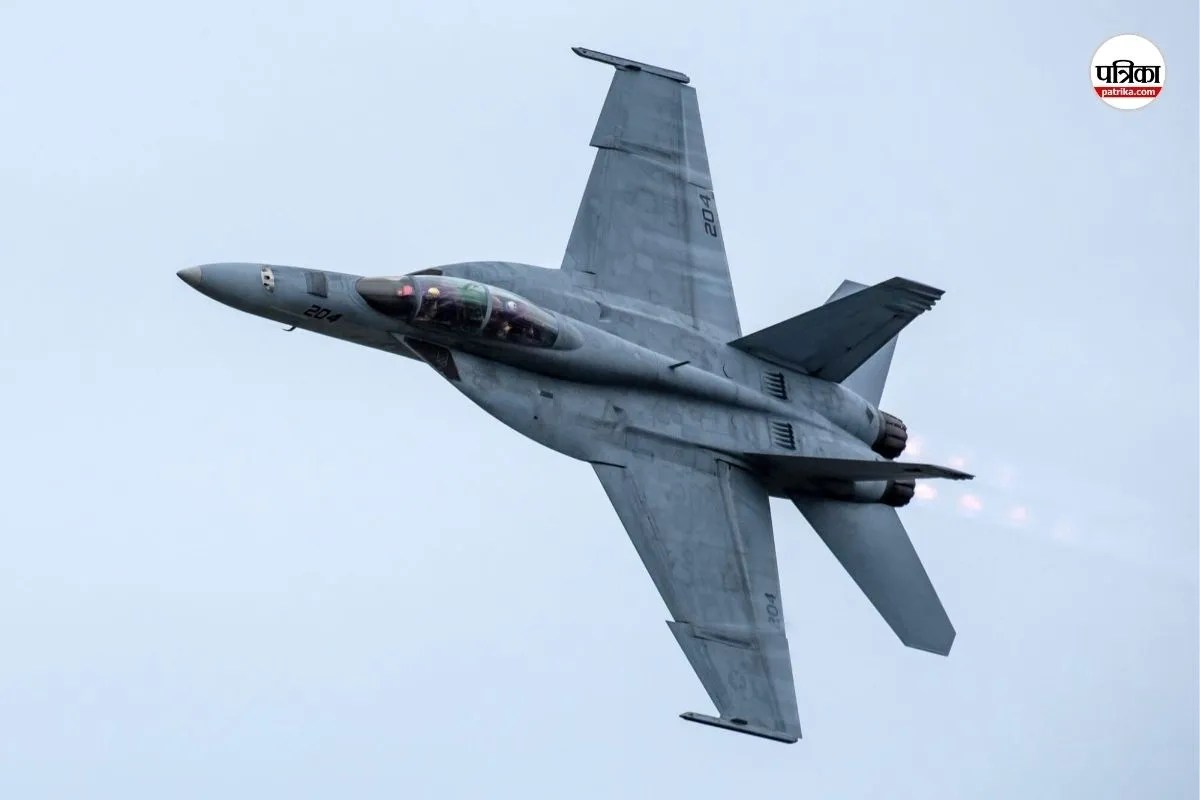
The graininess of the footage is a deliberate choice, not a technical limitation. In the high-stakes theater of Middle Eastern brinkmanship, a blurry silhouette is often more valuable than a high-definition truth. When Iranian state-affiliated media recently circulated video claiming to show the successful downing of a U.S. F/A-18 Super Hornet, the Pentagon moved with uncharacteristic speed to dismiss the report. This wasn't just a routine denial; it was a desperate attempt to get ahead of a narrative that uses cheap pixels to simulate expensive victories.
The core of the incident involves a video purportedly showing a surface-to-air missile intercepting a twin-engine fighter jet. Tehran’s messaging suggests a triumph of domestic air defense systems over Western engineering. However, the American military maintains that no such loss occurred, and no wreckage has been presented. To understand why this matters, one must look past the immediate "did they or didn't they" and examine the mechanics of modern psychological warfare. Iran is not trying to win a dogfight in the sky; they are winning a branding war on the ground.
The Anatomy of a Visual Fabrication
Modern disinformation does not require sophisticated deepfakes. It relies on the "Omission of Context." Investigative analysis of the footage released by Iranian sources reveals several red flags that suggest the video is either recycled from older conflicts or depicts a target drone rather than a manned multi-role fighter.
First, the thermal signature of the aircraft in the video does not align with the heat dispersion patterns of a General Electric F414 engine, which powers the Super Hornet. When an F-18 is at cruise, its thermal footprint is distinct. The explosion in the clip shows a catastrophic airframe failure that would have resulted in a massive debris field. In the age of satellite surveillance and commercial high-resolution imaging, a crash site of that magnitude is impossible to hide. If a $70 million jet went down, the world would see the smoking hole from space within three hours.
Second, the telemetry data—or lack thereof—is telling. Whenever a carrier-based aircraft like the F-18 is lost, the naval "search and rescue" (SAR) protocols trigger a massive, visible surge in regional activity. During the timeframe of the alleged shootdown, U.S. carrier strike group movements remained standard. There were no emergency transponder signals, no scrambled rescue helos, and no radio silence breaks that typically accompany a "pilot down" scenario.
The Strategy of the Paper Tiger
Iran’s tactical goal with these claims is twofold. They need to project strength to a domestic audience while simultaneously testing the "denial threshold" of the United States. By claiming to have downed a flagship American fighter, the Islamic Revolutionary Guard Corps (IRGC) reinforces the idea that Western technology is vulnerable to their indigenous "Khordad" missile batteries.
This is a recurring pattern in the region. We saw it in 2019 with the downing of a Global Hawk drone. The difference there was physical evidence. Iran produced the wreckage. In the case of this F-18 claim, the absence of a "corpse" makes the assertion hollow. Yet, for the average consumer of state-run media in Tehran or Damascus, the visual of a flaming jet is enough. The truth is a secondary concern when the emotional impact of the video has already achieved its purpose.
Why the US Denies Everything Instantly
The Pentagon’s immediate dismissal is a shift in communication strategy. Historically, the Department of Defense would wait for a full investigation before issuing a formal statement. That luxury no longer exists. In the current information environment, a lie can circulate the globe six times before the truth has even finished its morning briefing.
By issuing an immediate "dismissal," the U.S. attempts to kill the virality of the Iranian claim. They know that if they wait even twelve hours, the "F-18 Down" headline becomes an accepted fact in certain geopolitical circles, regardless of later corrections. It is a war of attrition where the primary ammunition is the speed of the press release.
Hardware vs Information Software
The F/A-18 Super Hornet is a rugged machine, but it is not invincible. It has been the workhorse of American power projection for decades. However, its greatest threat in 2026 isn't a missile; it is the narrative that it can be swatted out of the sky by a budget-friendly defense system.
If Iran were to actually down a Super Hornet, it would represent a massive intelligence failure and a shift in the regional balance of power. It would mean their radar systems have figured out how to bypass the electronic warfare suites that the Navy spends billions to maintain. This is exactly why Tehran broadcasts these videos. They want to sow doubt among regional allies who rely on the "security umbrella" of American air superiority. If the umbrella has holes, those allies might start looking elsewhere for protection.
The technical reality is that the F-18 operates within a "layered" defense environment. It is rarely alone. It is supported by EA-18G Growlers that jam enemy signals and E-2D Hawkeyes that provide a god-like view of the battlespace. To hit a Hornet, you have to see through the noise, and the video provided by Iran shows a clear, un-jammed target. That alone suggests the "target" was either not an F-18 or was not actively defending itself—further evidence of a staged or recycled event.
The Risk of Accidental Escalation
The danger of this "video warfare" is that it creates a feedback loop. When a nation claims a kill, they feel pressured to follow up with actual kinetic action to prove their prowess. If the world laughs at a fake video, the IRGC might feel compelled to try for a real shootdown to regain face.
We are entering an era where the "perception of a hit" is almost as damaging as the hit itself. For the pilots flying these sorties over the Persian Gulf, the stakes have changed. They aren't just managing their fuel and their sensors; they are flying against a propaganda machine that wants their image in flames, whether they are actually in the cockpit or not.
The U.S. Navy should consider declassifying its own gun-camera or cockpit footage more frequently to counter these claims. Transparency is the only antidote to the grainy, low-res fakes that dominate the social media cycle. Until then, the public is left to decipher the truth between a silent Pentagon and a loud, but empty, Iranian media apparatus.
Check the flight tracking data for the Persian Gulf over the next forty-eight hours; the absence of redirected naval assets will tell you more than any state-sponsored video ever could.