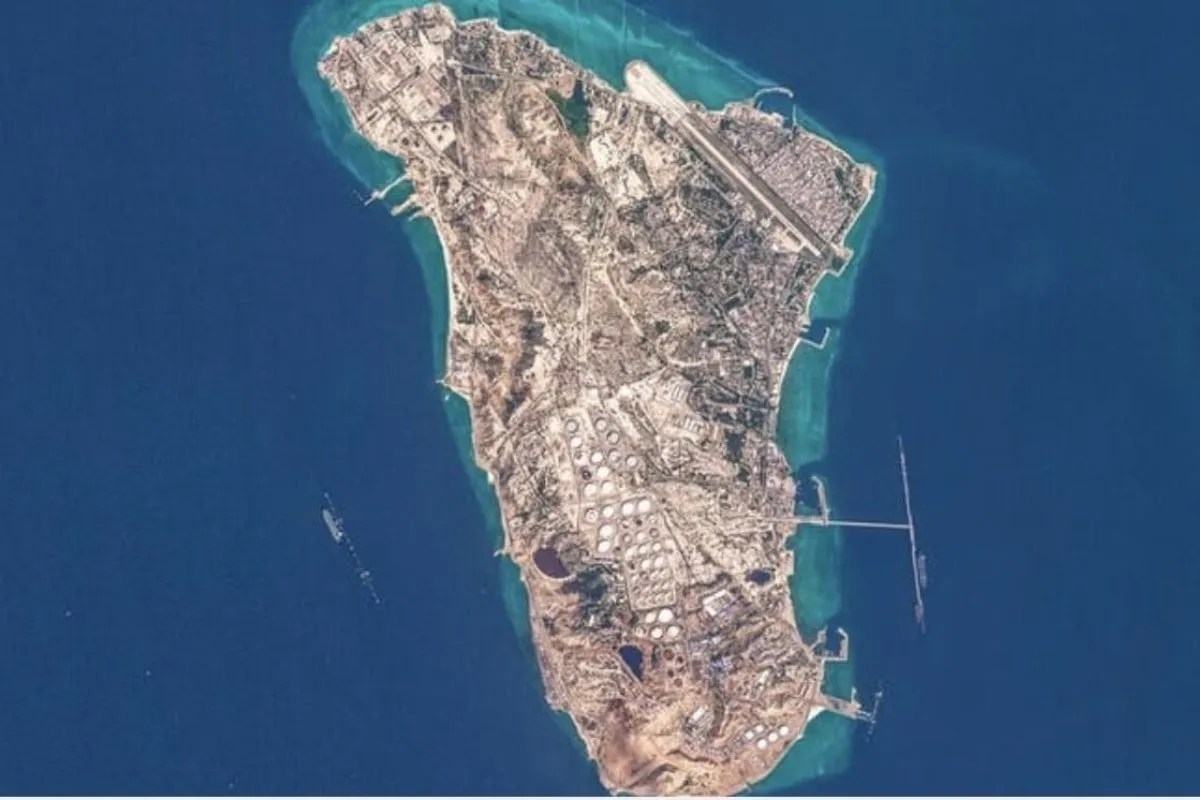
The Strait of Hormuz is not just a geographical chokepoint. It is the jugular vein of the global energy market. Iran’s recent strategic signals regarding which vessels can safely navigate this 21-mile-wide passage represent a calculated fracturing of international maritime law. By offering informal "green channels" to ships from India, Russia, and China, Tehran is effectively weaponizing the right of innocent passage. This is no longer a localized standoff between the United States and Iran. It is a fundamental restructuring of who pays the price for instability in the Middle East.
While the Western press focuses on the threat of a total closure, the real story is the creation of a tiered hierarchy of safety. If you are a tanker carrying Russian crude or Chinese manufactured goods, the Persian Gulf remains a predictable trade route. If you are flying a flag associated with G7 nations or carrying cargo destined for Israeli ports, the waters have become a high-stakes lottery. This selective enforcement of maritime "permission" is designed to isolate the West while cementing a new economic bloc that operates outside the reach of Washington’s sanctions.
The Death of the Universal Commons
For decades, the global economy relied on the assumption that the high seas were a universal commons. The United States Navy acted as the primary guarantor of this stability. That era is ending. Iran is demonstrating that it can dictate the terms of trade without firing a single missile at a Western destroyer. By granting immunity to specific nations, Tehran is forcing a choice upon the world's emerging economies: side with the existing international order and face rising insurance premiums and security risks, or align with the Iranian-Russian-Chinese orbit for guaranteed passage.
The math is brutal. Roughly 20 percent of the world's total oil consumption passes through this strait. If India or China can secure lower freight and insurance costs because their vessels are "whitelisted" by the Islamic Revolutionary Guard Corps (IRGC), they gain a massive competitive advantage. This isn't just about avoiding conflict. It is about the redistribution of global wealth through the control of transit.
Why India is the Wildcard
India’s position is particularly delicate. New Delhi has spent years cultivating a strategic partnership with Tehran, primarily centered on the Chabahar Port project. This port is India’s gateway to Central Asia, bypassing Pakistan. For the Indian government, maintaining the favor of the Iranian maritime authorities is a matter of national energy security.
Recent communications between New Delhi and Tehran suggest a "gentleman’s agreement" regarding the safety of Indian crews and cargo. This creates a friction point with Washington. The U.S. expects its allies to support freedom of navigation for all, yet India cannot afford to see its energy prices spike because of a conflict it didn't start. Iran understands this lever perfectly. By exempting India, they prevent a unified international front against their maritime tactics.
The Shadow Market of Insurance and Escorts
The most immediate impact of this selective permission is found in the insurance markets. Lloyd’s of London and other major underwriters have already designated the Persian Gulf as a high-risk area. However, "whitelisted" ships are beginning to explore alternative insurance structures.
Russia and China have been developing sovereign insurance guarantees that operate independently of the Western-dominated International Group of P&I Clubs. When Iran signals that a Chinese ship is safe, the risk profile for that vessel drops to near zero, regardless of what the London markets say. This creates a shadow economy where the cost of doing business is dictated by political alignment rather than actuarial science.
The Infrastructure of Exclusion
To understand how this works on the water, we have to look at the IRGC’s "mosquito fleet" and their coastal surveillance capabilities. They don't need a blue-water navy to control the strait. They use:
- Shore-based anti-ship cruise missiles that can reach across the entire width of the passage.
- Fast attack craft capable of swarming even the largest VLCC (Very Large Crude Carrier).
- Electronic warfare suites that can spoof GPS signals, leading ships into Iranian territorial waters where they can be legally "detained."
When a Russian or Chinese vessel approaches, the IRGC’s radar operators see more than a blip. They see a diplomatic shield. The "permission" granted to these nations isn't just a verbal promise; it is integrated into the operational rules of engagement for the forces patrolling the water.
The Failure of Operation Prosperity Guardian
The U.S.-led coalition intended to protect shipping in the Red Sea and the Gulf of Aden has struggled to produce a deterrent effect. The primary reason is that the threat is asymmetrical. It costs a few thousand dollars to build a drone or a naval mine, while it costs millions to fire an interceptor missile from a billion-dollar destroyer.
Iran is watching the Red Sea closely. They have seen that even the most advanced navy in the world cannot fully guarantee the safety of every commercial ship in a narrow waterway. By offering a "diplomatic solution" to certain countries, they are offering an exit ramp from the chaos. It is a classic "good cop, bad cop" routine played out on a global scale. The Houthi rebels in the south provide the threat, while Tehran in the north provides the exemption.
The Russian Connection
Russia's role in this maritime realignment cannot be overstated. Since the invasion of Ukraine and the subsequent sanctions on Russian oil, Moscow has become increasingly dependent on "dark fleets"—ships with opaque ownership that often turn off their transponders.
These ships are now the backbone of the trade moving through the Strait of Hormuz. Iran and Russia are no longer just partners in arms; they are partners in evasion. The Strait of Hormuz serves as the laboratory for a world where the U.S. dollar and the U.S. Navy no longer set the rules of the road. If a ship is carrying Russian oil to a Chinese refinery, and it is protected by an Iranian guarantee, the Western world’s ability to influence that transaction is essentially zero.
The Economic Consequences of a Tiered Strait
If this trend continues, we will see a bifurcation of global shipping. We are looking at a future where:
- Western shipping lines are forced to take the long route around the Cape of Good Hope, adding weeks to transit times and millions to fuel costs.
- Asian and Eastern European lines maintain the shorter, cheaper route through the Strait, giving their industries a permanent cost advantage.
- The port of Jebel Ali and other regional hubs lose their status as neutral ground, becoming battlegrounds for diplomatic influence.
This isn't a hypothetical. The shift is happening in the data. We are seeing a slow but steady migration of ship registrations to flags that are perceived as "safe" by the Iranian authorities. The "Flag of Convenience" system is being replaced by a "Flag of Political Protection."
The Illusion of Neutrality
Many analysts argue that Iran would never truly close the strait because it would hurt their own economy. This misses the point. Iran doesn't need to close the strait; they only need to make it expensive for their enemies and cheap for their friends. This "active management" of the waterway is far more effective than a total blockade. A blockade invites a massive military response. Selective permission creates a slow-motion collapse of Western maritime dominance.
The real danger lies in the precedent this sets. If the Strait of Hormuz becomes a managed toll road for political allies, what stops other nations from doing the same at the Strait of Malacca or the Bab el-Mandeb? The world is moving toward a fragmented maritime reality where your safety depends on your passport, not on the law.
The Strategic Trap for Washington
The United States is caught in a dilemma. To break the Iranian "green channel" system, the U.S. would have to either provide a permanent escort for every non-exempt ship—a logistical impossibility—or take direct kinetic action against Iranian coastal assets.
The latter risks a full-scale war that would spike oil prices to levels that could collapse the global economy. Iran knows this. They are betting that the West’s fear of $200-a-barrel oil is greater than its desire to maintain the principle of free navigation.
So far, that bet is paying off.
The "permission" given to India, Russia, and China is a clear signal that the world's power centers are shifting. The ocean is no longer a neutral space. It is a chessboard where the squares are being colored in by those who control the narrowest points of passage.
Would you like me to analyze the specific impact of these maritime exemptions on the current crude oil futures market?