The coffee in Rome tastes of ancient dust and modern anxiety. If you sit at a small, wobbly zinc table near the Piazza Colonna, you can watch the sleek black sedans slip behind the gates of the Palazzo Chigi. This is the heart of Italian power. To the casual traveler, it is a backdrop for a selfie. To the person behind the wheel of one of those cars, it is a labyrinth where careers go to die.
Italy changes its prime ministers almost as often as some people change their linens. Since the end of the Second World War, the country has cycled through nearly 70 governments. It is a dizzying, frantic carousel. Imagine trying to build a house when the architect is fired every eleven months. The plumbing never gets finished. The roof remains a skeletal dream. The garden is nothing but weeds.
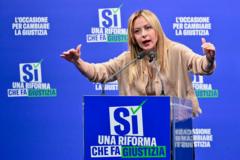
Giorgia Meloni, the first woman to lead this complicated nation, is tired of the carousel. She has proposed a rewrite of the Italian Constitution that would fundamentally alter how power is held, used, and lost. It is a plan her supporters call "the mother of all reforms." Her critics call it a slide toward autocracy. But for the average Italian—the baker in Trastevere or the tech worker in Milan—the stakes aren't just about legal jargon. They are about whether the person they vote for actually stays in the room long enough to turn the lights on.
The Architect’s Dilemma
Under the current system, the Italian Prime Minister is a bit like a conductor who doesn't actually have the authority to tell the violinists when to start playing. The President of the Republic holds the real baton, possessing the power to appoint prime ministers and dissolve parliament. It was designed this way on purpose. After the trauma of Benito Mussolini’s dictatorship, the founders of the 1948 Constitution were terrified of "the strongman." They built a system of checks and balances so thick and heavy that it frequently results in total paralysis.
Meloni wants to introduce the premierato. This would allow for the direct election of the Prime Minister. In theory, the person the people choose stays in power for a full five-year term. No more backroom deals. No more "technocratic" governments led by unelected bankers when the coalition falls apart.
Consider a hypothetical citizen named Giulia. She lives in a small town in Calabria where the roads have been crumbling for a decade. She votes for a candidate who promises infrastructure. Six months later, that candidate’s coalition collapses because a minor party disagreed over a maritime regulation. A new Prime Minister is appointed—someone Giulia didn’t vote for and doesn't trust. The road remains a ruin.
For Giulia, the "mother of all reforms" sounds like a promise of stability. It sounds like accountability. If the road isn't fixed in five years, she knows exactly whose face to put on the "Wanted" poster at the next election.
The Invisible Stakes
But the beauty of a sunset in the Roman Forum often masks the jagged edges of the ruins. The opposition argues that by stripping the President of the power to choose leaders and by guaranteeing the winning coalition a 55% majority in parliament, Meloni is dismantling the safety nets that keep Italian democracy from veering off a cliff.
The President in Italy is traditionally a figure of moral glue. When the political parties are screaming at each other, the President is the adult in the room who reminds everyone they are Italian first and partisans second. If the Prime Minister is directly elected and handed a guaranteed majority, the President becomes a figurehead. A ghost.
Is stability worth the loss of balance?
It is a question that haunts the dinner tables from Naples to Bolzano. Italy is a country that feels its history in its bones. Every cobblestone has seen a riot, a revolution, or a rebirth. There is a deep-seated suspicion of anyone who asks for more power, even if they claim they only want it so they can finally get things done.
The Weight of the Five Percent
The math of the reform is where the poetry turns into a cold, hard gamble. The proposal suggests that whichever coalition wins the most votes—even if it is just a plurality—gets boosted to a 55% majority in the seats of parliament.
Think of it as a winner-take-all poker game where the person with the highest pair is suddenly handed three extra aces by the dealer.
Meloni argues this is the only way to end the "revolving door" of Roman politics. Without a guaranteed majority, governments are held hostage by tiny, fringe parties. One small defection can topple a giant. It is a system that rewards the loudest, most stubborn minority. By forcing a majority, Meloni believes she can finally give Italy a "robust" (a word she loves, though many fear it) and predictable leadership.
The fear, of course, is what happens when that majority is used to silence the other 45%. Democracy is not just the rule of the many; it is the protection of the few. When the pendulum of power is welded into one position, it stops being a clock and starts being a club.
A Culture of the Permanent Temporary
To understand why this matters, you have to look at the Italian psyche. There is a concept known as l'arte di arrangiarsi—the art of getting by, of making do. Italians are masters at it because they have had to be. When the government is a fleeting shadow, you rely on your family, your village, and your own wits.
This reform is an attempt to kill the culture of the "permanent temporary." It is an attempt to make the state as solid as the marble of the Pantheon.
But marble is brittle. It cracks under pressure.
The critics suggest that Meloni is playing a long game. They see a leader who began in the far-right youth wings and has successfully rebranded as a conservative stateswoman. They worry that the premierato is not about efficiency, but about ego. They see a future where the delicate dance of Italian compromise is replaced by the heavy march of a single will.
The Ghost in the Room
During the debates in the Senate, the air grew thick with the memory of those who fought to create the 1948 Constitution. These were people who had survived the darkest years of European history. They didn't want a fast government; they wanted a safe one. They believed that friction was the price of freedom.
If you walk through the streets of Rome today, you don't see people shouting about constitutional articles. You see them worried about the price of gas, the dwindling opportunities for the youth, and the slow, agonizing bureaucracy that makes opening a simple business feel like an odyssey.
Meloni is betting that these people care more about results than they do about the fine print of presidential powers. She is betting that the hunger for a leader who can actually lead will outweigh the historical fear of a leader who cannot be stopped.
It is a high-stakes play. If the reform passes a referendum, Italy will become a different kind of republic. It will be more efficient, yes. It will be more stable, perhaps. But it will also be a place where the "adult in the room"—the neutral President—has been moved to the hallway.
The Final Move
The sun sets over the Tiber, casting long, distorted shadows across the water. The tourists are heading to dinner, unaware that the very structure of the country they are admiring is being debated in a room just a few blocks away.
Meloni stands at the podium, her voice steady, her gaze fixed on a vision of an Italy that finally stands still long enough to move forward. Across from her sit the ghosts of the partisans and the founders, whispering warnings about the danger of a path that has no turns.
The choice will eventually belong to the people. Not the politicians in their tailored suits, but the people who have to live with the consequences of a government that either does too little or has the power to do too much.
In the end, every constitution is a mirror. It reflects what a nation fears most. For eighty years, Italy feared its own strength. Now, it must decide if it fears its own weakness even more.
The carousel is slowing down. The music is changing. And when the ride finally stops, someone will have to step off and take the first real step into a future where there are no more excuses for standing still.
The black sedans continue to roll through the gates of the Palazzo Chigi, their windows tinted, their destinations certain, while the rest of the country waits to see if the driver is finally staying for good.
Would you like me to analyze the specific legal shifts in the powers of the Italian President under this proposed reform?