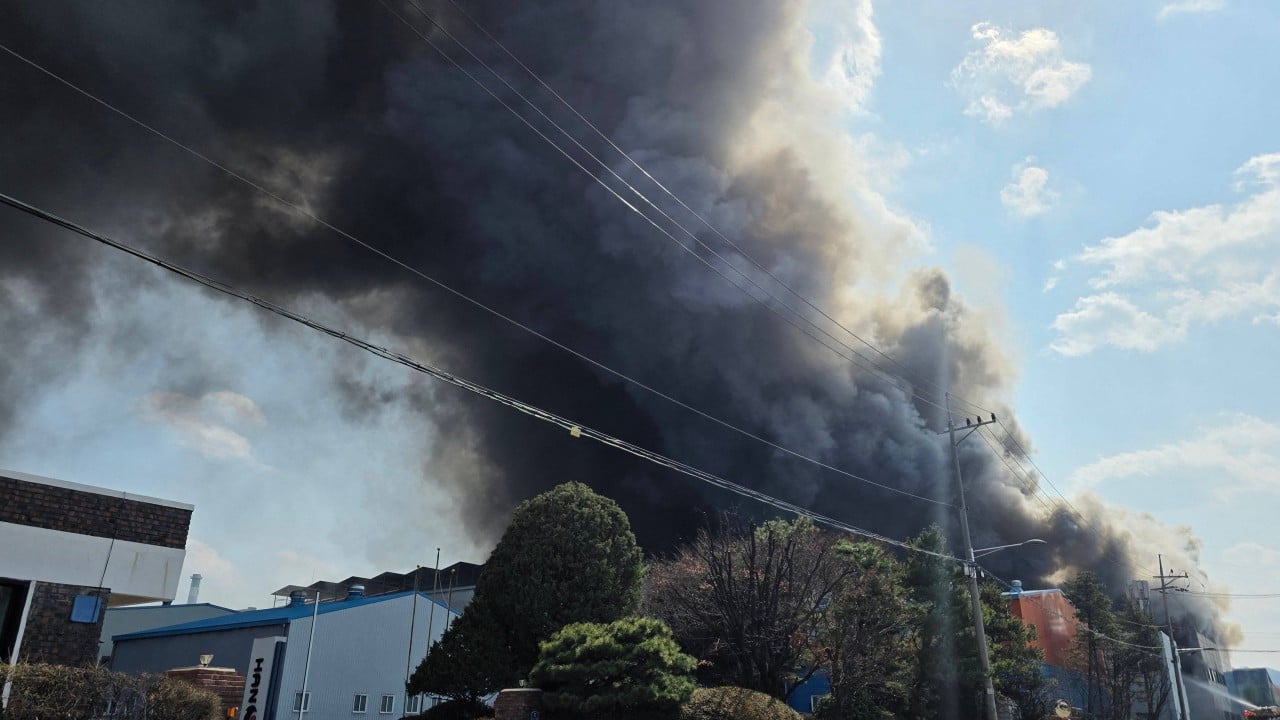
The smoke hadn't even cleared from the Hwaseong battery plant disaster before the alarms started screaming again. This time, a massive fire at a factory in South Korea’s industrial heartland has left at least 55 people injured. It's a recurring nightmare. If you've been following the news out of Gyeonggi Province, you know this isn't just a streak of bad luck. It's a systemic failure. We are seeing a pattern where industrial efficiency is prioritized over the basic right to go home after a shift.
Emergency crews rushed to the scene as the blaze ripped through the facility, sending plumes of toxic black smoke into the sky. Most of the 55 injured are suffering from smoke inhalation, while others have more severe burns. We’re talking about a chaotic scene where workers were forced to make split-second decisions to leap from windows or navigate labyrinths of melting plastic and metal.
Why South Korean Factories Keep Burning
South Korea is a global manufacturing powerhouse. That’s a fact. But that reputation has a dark side that nobody likes to discuss at trade shows. The country has some of the most advanced technology on earth, yet its safety protocols often feel like they’re stuck in the 1980s.
Small and medium-sized enterprises (SMEs) often cut corners. They operate in aging buildings that weren't designed for the high-intensity electrical loads or chemical storage they house today. When you cram modern production quotas into outdated infrastructure, something eventually snaps. In this latest incident, the fire spread with terrifying speed. That suggests a lack of fire-retardant materials or, more likely, a failure in the automated suppression systems.
I've looked at the data from the National Fire Agency. Industrial fires in South Korea aren't decreasing at the rate you’d expect for a high-income nation. The "Pali-pali" (hurry, hurry) culture is great for shipping smartphones in record time. It's lethal for safety inspections. You can’t rush a structural integrity check. You can’t "hustle" your way through chemical storage compliance.
The Human Cost of Manufacturing Dominance
At least 55 people are currently in hospitals. Think about that number. That’s 55 families waiting in sterile corridors for news. Many of these workers are migrants. South Korea’s industrial sector relies heavily on labor from Southeast Asia and Central Asia. These workers often face language barriers that make safety training less effective.
If a worker doesn't fully grasp the emergency exit instructions because they weren't provided in their native tongue, that's a death sentence. We saw this in the lithium battery plant fire earlier, and we're seeing the echoes of it here. The government talks about "strict penalties," but the Serious Accidents Punishment Act (SAPA) hasn't yet become the deterrent it was meant to be. Companies still seem to view the occasional fine as a "cost of doing business" rather than a reason to overhaul their entire safety culture.
Breaking the Cycle of Negligence
We need to stop acting surprised when these fires happen. The warning signs are usually there for months. Blocked fire exits. Malfunctioning sprinklers. Improperly stored flammable pallets. It’s always the same story.
If you're an investor or a consumer, you should be asking about the supply chain. Where was your gear made? Was it made in a facility that treats its fire code as a suggestion? Real change only happens when the financial hit of a disaster outweighs the profit of cutting corners.
Local authorities in Gyeonggi and beyond have to move past "scheduled" inspections. We need unannounced, rigorous checks that actually hold management accountable. If a floor manager knows the inspector is coming on Tuesday at 2:00 PM, they’ll clear the exits on Tuesday at 1:00 PM. That doesn't keep people safe on Wednesday.
The 55 people injured in this latest blaze are a reminder that "Made in Korea" should stand for safety as much as it stands for quality. Right now, it doesn't.
Check your own workplace's emergency exits today. Don't assume they work. Make sure your local fire department has conducted a recent walkthrough of your facility. Demand to see the most recent safety audit. If management hesitates, that's your first red flag. Stay vocal and stay safe.