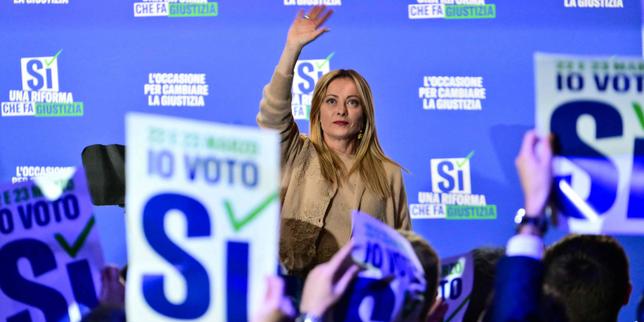
Italy's voting booths are open this weekend, and the stakes couldn't be higher for Giorgia Meloni. On March 22 and 23, 2026, Italians are heading to a constitutional referendum that's nominally about legal technicalities but actually serves as a massive stress test for the government’s longevity. If you think this is just about how judges and prosecutors organize their office space, you're missing the point. This is a battle over the soul of the Italian state.
The "Nordio Reform"—named after Justice Minister Carlo Nordio—wants to tear down the wall between those who judge and those who prosecute. For decades, Italian magistrates have been a single "family." They take the same exams, work under the same governing body, and can switch roles. Meloni says this creates a "corporate" spirit where judges and prosecutors are too cozy. Her solution? Separate them entirely.
The end of the judge prosecutor revolving door
Under the current system, a prosecutor today could be your judge tomorrow. Meloni's team argues this is fundamentally unfair. They want a "third-party" judge who treats the defense and the prosecution as absolute equals. To do that, the reform proposes two separate High Councils of the Judiciary (CSM)—one for judges and one for prosecutors.
But here’s the kicker that has the legal world screaming. The reform introduces a lottery system for picking the members of these councils. Instead of magistrates electing their own representatives, names would be drawn from a hat. The government says this kills the "cronyism" of judicial factions. Opponents say it’s a direct hit on the independence of the judiciary, turning a pillar of democracy into a game of bingo.
Why this referendum is a political trap
Meloni is playing a dangerous game. She remembers 2016, when Matteo Renzi tied his premiership to a constitutional referendum, lost, and had to resign. She’s publicly stated her government won’t fall if the "No" side wins, but don't buy it. A defeat would be a blood in the water moment for an opposition that's finally starting to look organized.
The "No" camp is a broad, messy coalition. You've got Elly Schlein’s Democratic Party (PD), Giuseppe Conte’s Five Star Movement, and the powerful ANM (National Association of Magistrates). They argue the reform doesn't actually speed up Italy's notoriously slow trials. Instead, they claim it’s a "vendetta" for the years of investigations into Silvio Berlusconi and other right-wing figures. They fear that once prosecutors are separated from the "culture of jurisdiction," they’ll eventually fall under the thumb of the Ministry of Justice, becoming a sort of "super-police" for the executive branch.
What the numbers actually tell us
While the rhetoric is fiery, the reality of "career switching" is almost non-existent. In 2024, less than 1% of magistrates actually moved between judging and prosecuting. The 2022 "Cartabia Reform" already made it nearly impossible to switch more than once.
So, why go through the massive headache of a constitutional referendum?
- Symbolism: It’s a peace offering to the ghost of Berlusconi and his Forza Italia party.
- Power Balance: It’s the first step in a larger plan to shift power toward the Prime Minister's office (the so-called "Premierato").
- Voter Mobilization: It keeps her base fired up against the "red togas" (left-wing judges) that the right has blamed for Italy’s problems since the 90s.
The risk of the empty ballot box
There's no quorum for this referendum. It doesn't matter if only ten people show up; the result stands. This is a double-edged sword for Meloni. While she doesn't need 50% participation, a low turnout with a "No" victory would be a disaster. It would show her "mandate from the people" is thinner than she likes to admit.
The polls have been tight. Early on, the "Yes" side had a comfortable lead, but the gap closed as the magistrates' unions and civil society groups ramped up their "Save the Constitution" campaign. If you’re in Rome or Milan right now, you see the posters everywhere. It’s not about the law anymore. It’s a "For or Against Meloni" poll.
What happens on Monday night
If the "Yes" wins, Meloni gets a massive boost. She’ll have succeeded where Berlusconi failed for thirty years. She’ll move forward with her other constitutional changes with the wind at her back. The judiciary will be forced into a messy, years-long restructuring that will likely paralyze the courts in the short term.
If the "No" wins, expect a pivot. She’ll likely lean harder into "law and order" rhetoric on immigration to distract from the loss. The opposition will finally have a win to rally around heading into the 2027 elections.
Watch the turnout figures on Sunday evening. If they're high in the north but tank in the south, Meloni's coalition might be showing cracks. The real story isn't in the courtroom; it's in the tally.
If you're following the results, keep an eye on the exit polls specifically from the "red" regions like Emilia-Romagna. A swing there toward the "Yes" would mean Meloni has successfully bypassed traditional party lines. If not, the "mother of all reforms" might just become her biggest political bruise.