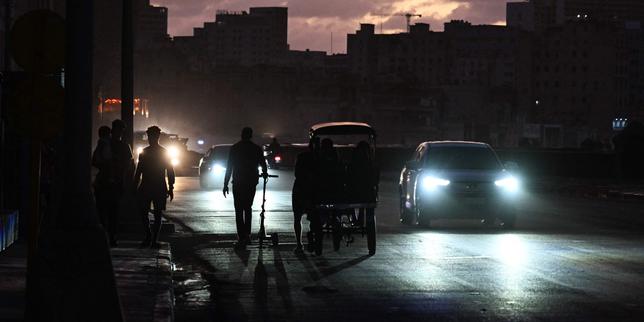
The total collapse of the Cuban national electric system (SEN) for the third time in a single month is not an isolated series of technical accidents but the terminal stage of a decades-long infrastructure deficit. When a national grid enters a state of "zero generation," the recovery process is governed by physics and thermodynamics, not policy. The recurring failures in March 2026 demonstrate that the Cuban grid has crossed a threshold where the frequency of disturbances outpaces the system's ability to maintain a baseline of inertia. To understand why the lights stay off, one must deconstruct the grid into three critical failure vectors: thermal plant obsolescence, fuel supply volatility, and the "islanding" effect of a fragmented distribution network.
The Inertia Deficit: Why the Grid Cannot Self-Heal
A functional electrical grid requires a constant balance between supply and demand, maintained at a precise frequency (60Hz in the Americas). In Cuba, this balance is managed primarily by aging Soviet-era thermal power plants (TVPs). These plants are designed to provide "baseload" power—steady, unyielding output. However, the Cuban TVPs are operating decades past their intended service life, with some units exceeding 40 years of continuous operation. In similar updates, take a look at: The Sabotage of the Sultans.
The physical state of these assets creates a lack of rotational inertia. Inertia acts as a shock absorber; when a large consumer turns on or a small generator trips, the physical mass of the spinning turbines in the large plants provides the momentary energy needed to keep the frequency stable. Because the Cuban TVPs are frequently offline for "unprogrammed maintenance," the grid relies on smaller, distributed diesel generators and floating power ships (Turkish Karadeniz Powerships). These smaller units lack the massive physical inertia of the large thermal plants. When a single point of failure occurs—such as the tripping of the Antonio Guiteras plant in Matanzas—the frequency drop is so rapid and severe that it triggers a "cascading trip" across the entire island. The system lacks the "buffer" to survive even minor fluctuations.
The Fuel Lifecycle Bottleneck
The secondary driver of the March blackouts is the breakdown of the fuel logistics chain. Cuba’s energy matrix is heavily dependent on heavy fuel oil (HFO) and diesel. The transition from relying on subsidized Venezuelan crude to attempting to source fuel on the open market has introduced a lethal variable: "just-in-time" fuel delivery for a system that requires deep reserves. NBC News has provided coverage on this fascinating subject in extensive detail.
The logistical failure operates on a specific cost function:
- Source Volatility: Sanctions and credit-risk premiums increase the cost of every barrel, reducing the total volume the state can procure.
- Transportation Decay: The domestic tanker fleet and port infrastructure are in disrepair, leading to delays in moving fuel from the floating storage units to the land-based plants.
- Quality Degradation: The use of high-sulfur domestic crude in plants designed for lighter fuels accelerates the corrosion of boiler tubes and heat exchangers, leading to the very "unprogrammed outages" that cause the grid to collapse.
In March, the depletion of diesel stocks for the distributed generation groups (the small local engines intended to provide backup) meant that when the main thermal plants failed, there was no secondary layer of defense to keep hospitals and essential services online.
The Mechanics of a Total Blackout Recovery
When the Cuban grid hits "zero generation," the restart process is a high-stakes engineering feat known as a "Black Start." This is not as simple as flipping a switch; it is the organic growth of "energy micro-islands" that must eventually be synchronized.
The process follows a rigid hierarchy:
- The Spark: Small, local generators are started to provide the initial power to the auxiliary systems of a larger thermal plant (pumps, fans, and control systems).
- The Stabilization: Once a large plant like the Felton or Guiteras is synchronized, it begins to feed a small, localized "island" of consumers.
- The Synchronization: This is the most dangerous phase. Operators must connect two separate energized islands. If the frequency and phase of the two islands are not perfectly aligned at the moment of connection, the resulting surge of energy will trip the breakers in both, returning the entire province—or the entire country—to total darkness.
The triple collapse in March suggests that the synchronization equipment at key substations is either failing or that the instability of the primary generators is so high that they cannot maintain a steady enough frequency to allow for reconnection. Each failed restart attempt further stresses the aging transformers and turbines, creating a feedback loop of mechanical fatigue.
The Distribution-Generation Mismatch
While the international focus remains on the large power plants, the Cuban distribution network (the wires and transformers that deliver power to homes) is a silent contributor to the instability. Decades of underinvestment have resulted in high line losses. In a healthy system, about 5% to 8% of power is lost during transmission. In Cuba, this figure is estimated to be significantly higher due to dilapidated insulation and overloaded circuits.
When the grid attempts to recover, the "inrush current"—the massive spike in demand that occurs the moment power is restored to a neighborhood—often exceeds the capacity of the recovering generator. If the state does not strictly manage "load shedding" (deliberately keeping certain areas dark), the very act of turning the lights back on in Havana can crash the generators in Mayabeque.
The Decentralization Paradox
The Cuban government has pivoted toward "distributed generation"—thousands of small diesel and gas engines scattered across the country. While this was intended to make the system more resilient to hurricanes, it has made the system harder to manage during a fuel crisis.
A central thermal plant is more efficient per gallon of fuel than a thousand small diesel engines. When fuel is scarce, the logistical challenge of trucking diesel to thousands of individual sites is far more complex than piping fuel to a handful of coastal plants. The "Three Pillars of Energy Security" (Availability, Affordability, and Reliability) are currently in direct conflict in the Cuban model. To achieve Reliability (through distributed engines), the state sacrifices Affordability (due to the high cost of diesel) and Availability (due to the logistical nightmare of distribution).
Structural Forecast and Tactical Reality
The frequency of total grid collapses in March indicates that the Cuban SEN has moved from a state of "chronic fragility" to "active systemic failure." Maintenance cycles for thermal plants have been shortened from years to months, and those months are often skipped entirely due to a lack of spare parts and specialized labor.
The immediate tactical outlook for the Cuban energy sector is a forced transition toward a "Feudal Grid" model. In this scenario, the national synchronized system is abandoned in favor of permanent regional islands. Havana, as the seat of government and tourism, will be prioritized through dedicated floating power ships, while the eastern provinces operate on a "survival rotation" of 4 to 6 hours of power per day.
For the grid to stabilize, an immediate injection of capital is required to replace—not repair—the thermal base. Specifically, the system requires a minimum of 3,000 MW of reliable baseload generation to maintain frequency. Currently, the gap between demand and available generation frequently exceeds 1,000 MW during peak hours. Without the replacement of the TVP fleet or a massive, rapid deployment of utility-scale solar paired with massive battery storage (BESS) to handle frequency regulation, the national grid will continue to cycle through collapses. The physics of the system have become decoupled from the political will to maintain it; until the mechanical inertia is restored, the "third blackout of March" is merely a data point in a downward trendline.
Strategic priority must shift from "restoring the grid" to "hardening critical nodes." This involves physically decoupling the power supply of essential infrastructure—water pumping stations, hospitals, and food processing—from the national SEN through dedicated microgrids. Relying on the national synchronization of the Cuban grid is no longer a viable strategy for any entity requiring continuous uptime. The grid is no longer a single entity; it is a collection of failing parts temporarily held together by emergency measures that are themselves exhausting the remaining life of the machinery.